RKD32 Installation and Configuration Manual.doc 16.10.2020
2/20
1. DESIGN AND APPLICATION
RKD32 electronic key cabinet enables management of keys or other items e.g. cards, remote control
devices, fobs, etc. The configuration in standalone mode is performed manually with MD70 panel which is
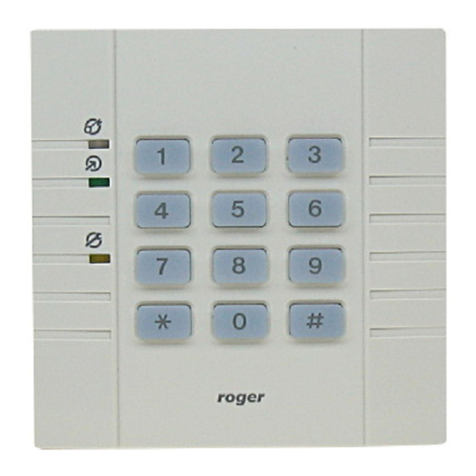
equipped with graphic touchscreen and Mifare card reader or remotely via web browser. The initial
configuration in network mode is performed with MD70 panel while further configuration in regard of users
and authorisation is performed in computer network on the level of VISO management software (RACS 5
system).
Up to four cabinets can be operated with single panel. In such scenario RKD32EXT cabinets are connected
to RKD32 cabinet. Prior to placing keys inside cabinet, they must be firmly attached to included RFID fobs.
RKD32 can recognize fobs so keys can be returned to any unoccupied slot in the cabinet. It is possible to
assign users with authorizations for particular keys. Typically users are identified at the panel with Mifare
proximity cards or PINs. When key is collected then both door lock and fob lock are released and frame
around the key is highlighted in green.
RKD32 cabinet is internally connected in factory and its installation requires only connection of power supply
and wall mounting inside premises.
Fig. 1 RKD32 overview
Characteristics
·Operates standalone or as a part of RACS 5 access control system
·WWW interface for managing the cabinet in standalone mode
·32 key sockets in a single cabinet
·Up to 4 cabinets controlled from the single control panel
·Key blocked mechanically when in a socket
·No extra seal between key and fob required
·Option to use an additional seal between fob an key
·Key identification by Mifare secure sector number
·Continuous socket monitoring
·Event log
·Time dependant authorisations for keys
·Signalization of prolonged key absence
·Free access to keys in office mode
·Key reservation
·Detailed reports on user activities and key circulation
·Emergency key releasing after commission opening the device housing
·Door opening detection
·Enclosure opening detection (tamper)