Logical object Access Point collects data from the Access Terminals and based on the received data
recognises user who logs in at the reader. Once the user is recognised, Access Point verifies user’s
authorisations and it can send the activation request to Automation Node when card is inserted and send
deactivation request to Automation Node when card is removed.
Logical object Automation Node controls logical object Output and logical object Output controls physical
output (e.g. relay) which can be located on any RACS 5 device within the same RS485 bus.
LED light line and BUZZER output
During low level configuration, LED line and buzzer are controlled by internal logic of the reader. During
normal operation, LED line ad buzzer are controlled by access controller to which reader is connected. When
reader operates in normal mode but it lost connection with access controller then LED line is pulsing
synchronically in green.
LED CARD ABSENT / PRESENT
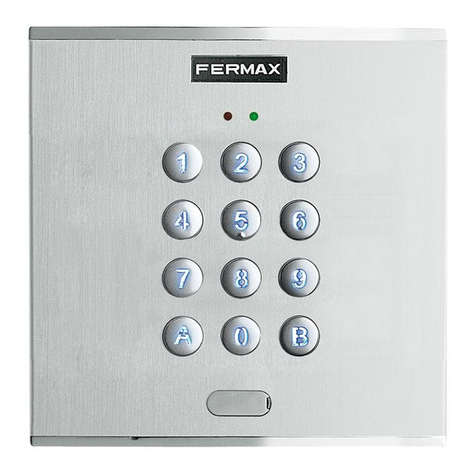
LED light line is bicolour one and it is represented in VISO management software by two individual outputs:
LED CARD ABSENT (red) and LED CARD PRESENT (green). By default the line is not configured with any
function and is switched off but when the reader is assigned to Access Point with card holder then it
becomes red when no authorized is in the holder and becomes green when authorized card is in the holder.
Additionally, each output (LED CARD PRESENT and LED CARD ABSENT) can be configured with any function
available in the system. In such case, an output is not controlled by default function related with card
presence in the holder but according to the rules of such assigned function.
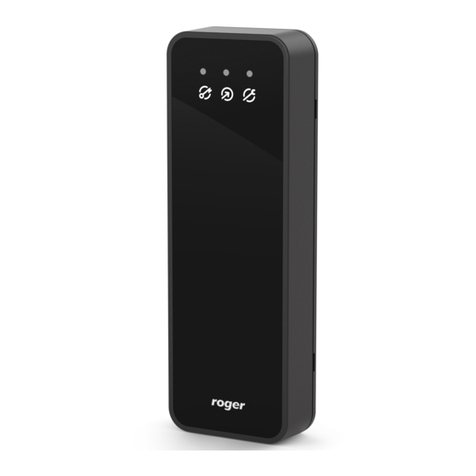
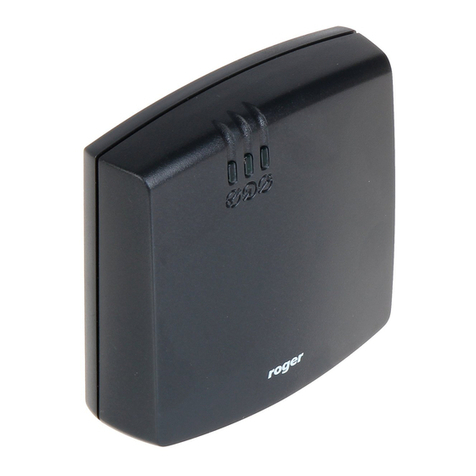
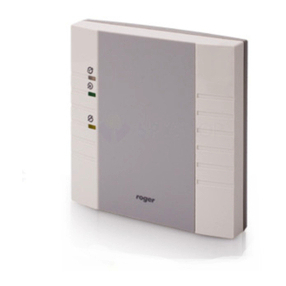
Fig. 2 LED light line on front panel
BUZZER
The buzzer is represented in VISO management software as BUZZER output and it operates according to
internal logic or it can be assigned with available function. Based on internal logic the buzzer signals card
reading (1 beep).
By default the internal logic priority is the lowest one (1) but it can be changed on the level of Access Point.
In case of operator assigned function it is possible to configure modulation and priority. If the same level of
priority is assigned then the newer signalling interrupts the current one (if used).