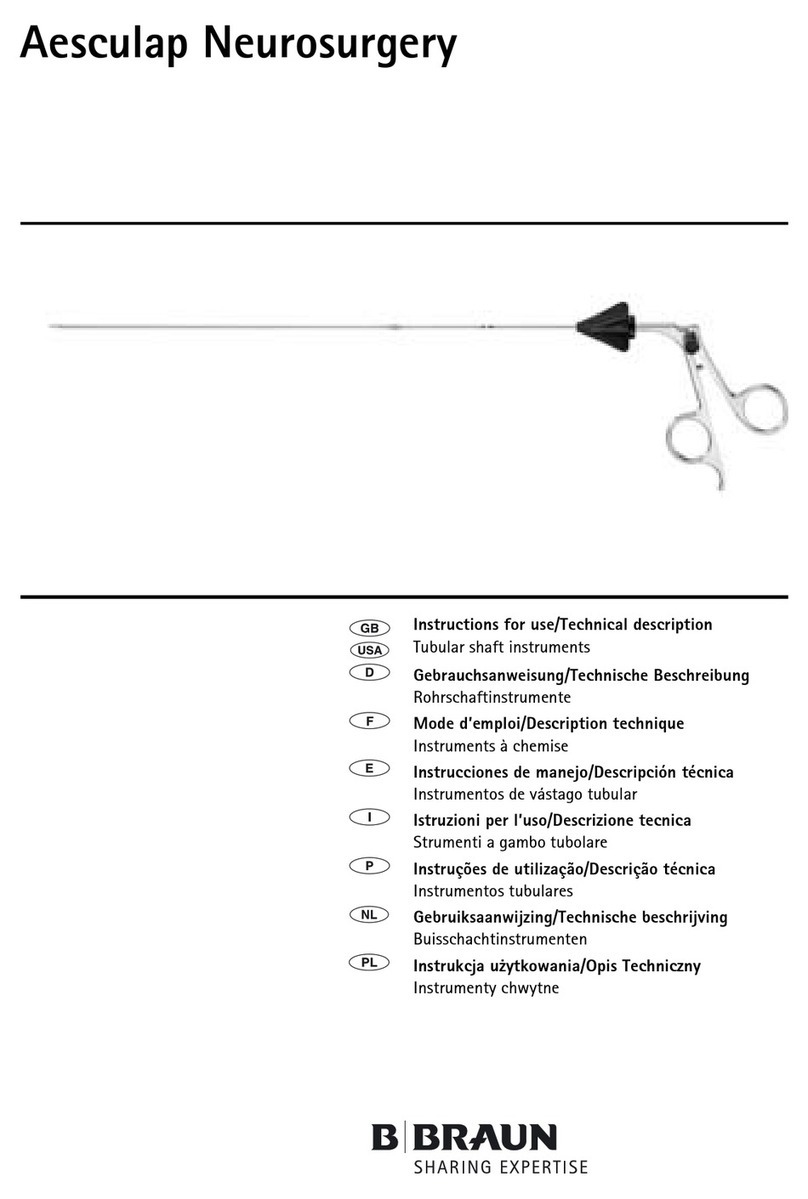
Aesculap Neurosurgery
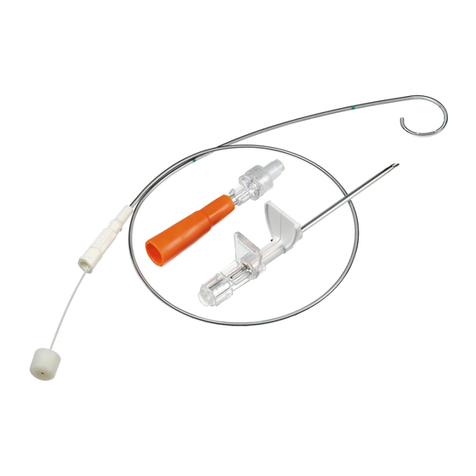
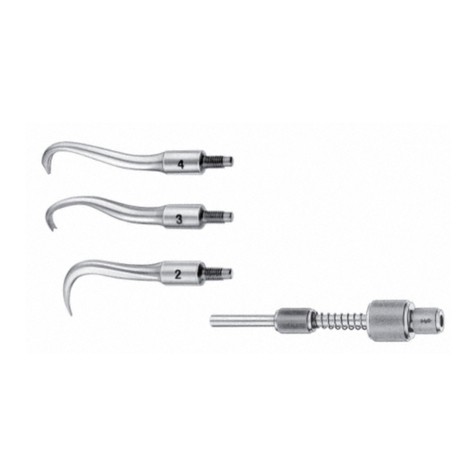
AVM microclip applying forceps
6
General notes
To avoid unnecessary, excessive contamination of the
complete instrument tray during operations, take care
that contaminated instruments are collected
separately and not put back into the instrument tray.
Encrusted or fixated residues from surgery can make
the cleaning process more difficult or ineffective, and
can cause corrosion of stainless steels. To avoid this,
the time interval between application and processing
should not exceed 6 h, and neither fixating pre-
cleaning temperatures >45 °C nor any fixating
disinfecting agents (active ingredient: aldehyde,
alcohol) be used.
Excessive doses of neutralizers or basic detergents can
cause chemical degradation and/or fading and
obliteration of laser inscriptions on stainless steel
surfaces, regarding visual reading and machine-
readability of the inscriptions.
Residues containing chlorine or chlorides e.g. in
surgical residues, medicines, saline solutions and in the
service water used for cleaning, disinfection and
sterilization will cause corrosion damage (pitting,
stress corrosion) and result in the destruction of
stainless steel products. To remove such residues, the
products must be rinsed sufficiently with fully
desalinated water and dried thoroughly.
Only process chemicals that have been tested and
approved (e.g. VAH/DGHM or FDA approval or CE mark)
and which are compatible with the product’s materials
according to the chemical manufacturers’
recommendations may be used for processing the
product. All process parameters specified by the
chemical’s manufacturer, such as temperatures,
concentrations and exposure times, must be strictly
observed. Failure to do so can result in the following
problems:
• Optical deterioration, e.g. fading or discoloration of
titanium or aluminum surfaces. For aluminum, pH
>8 in the application/process can already cause
visible surface changes.
• Material damage, e.g. corrosion, cracks, fracturing,
premature aging or swelling.
¾Do not use process chemicals that cause stress
cracking or brittleness of plastics.
¾For further detailed advice on hygienically safe and
material/value-preserving reprocessing, see
www.a-k-i.org, link to Publications, Red Brochure –
Proper maintenance of instruments.
¾Use suitable cleaning/disinfecting agents if the
product is put away in wet condition. To prevent
foam formation and reduced effectiveness of the
process chemicals: Prior to mechanical cleaning
and disinfecting, rinse the product thoroughly with
running water.