5
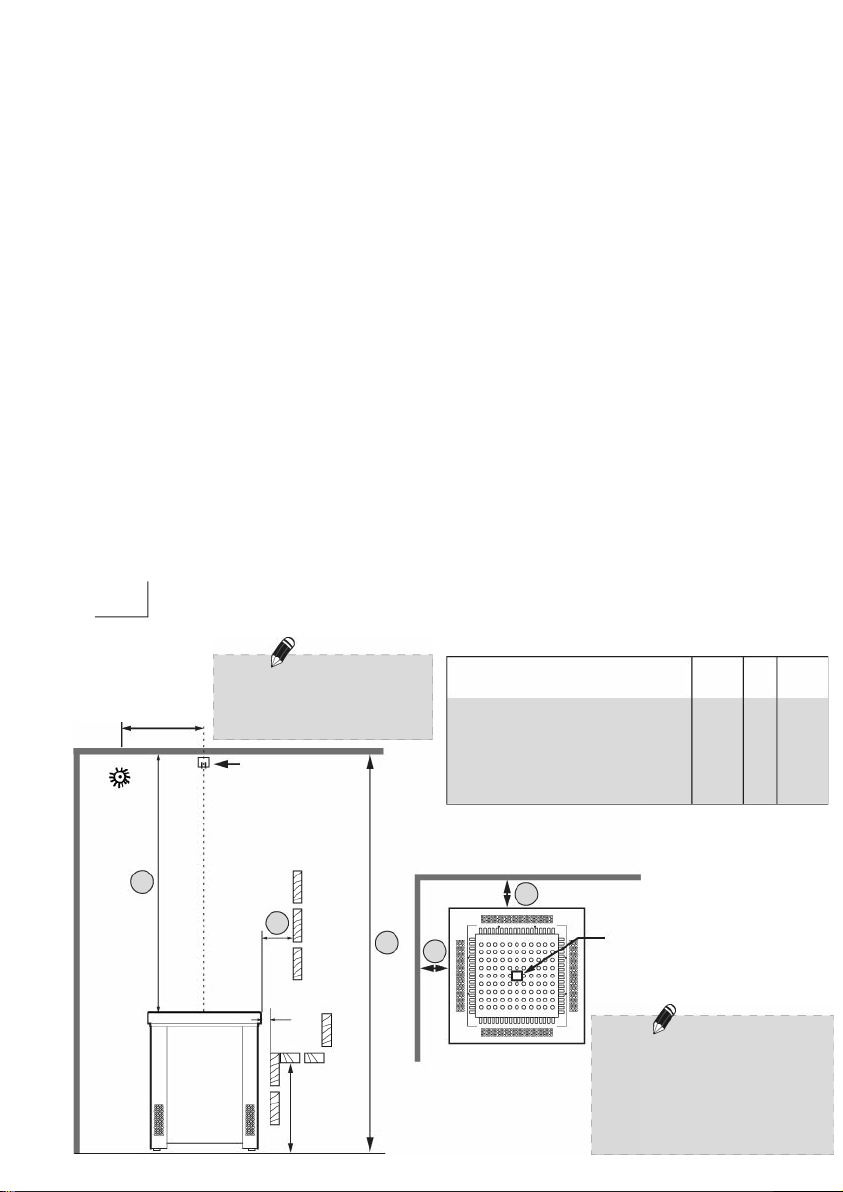
Minimum Safety Distance (mm)
Commercial Use
Fig. 2A
NOTE:
Sensor location is always in
the ceiling and must be center
part of the heater.
NOTE:
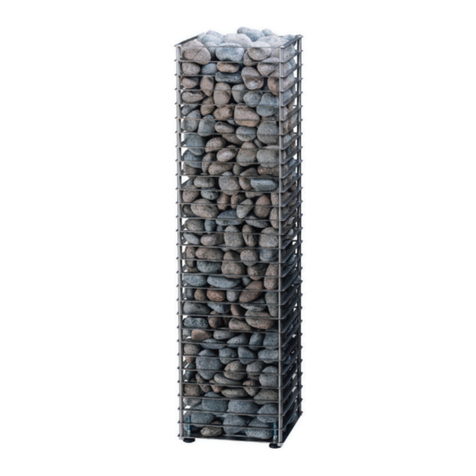
Heater Stones
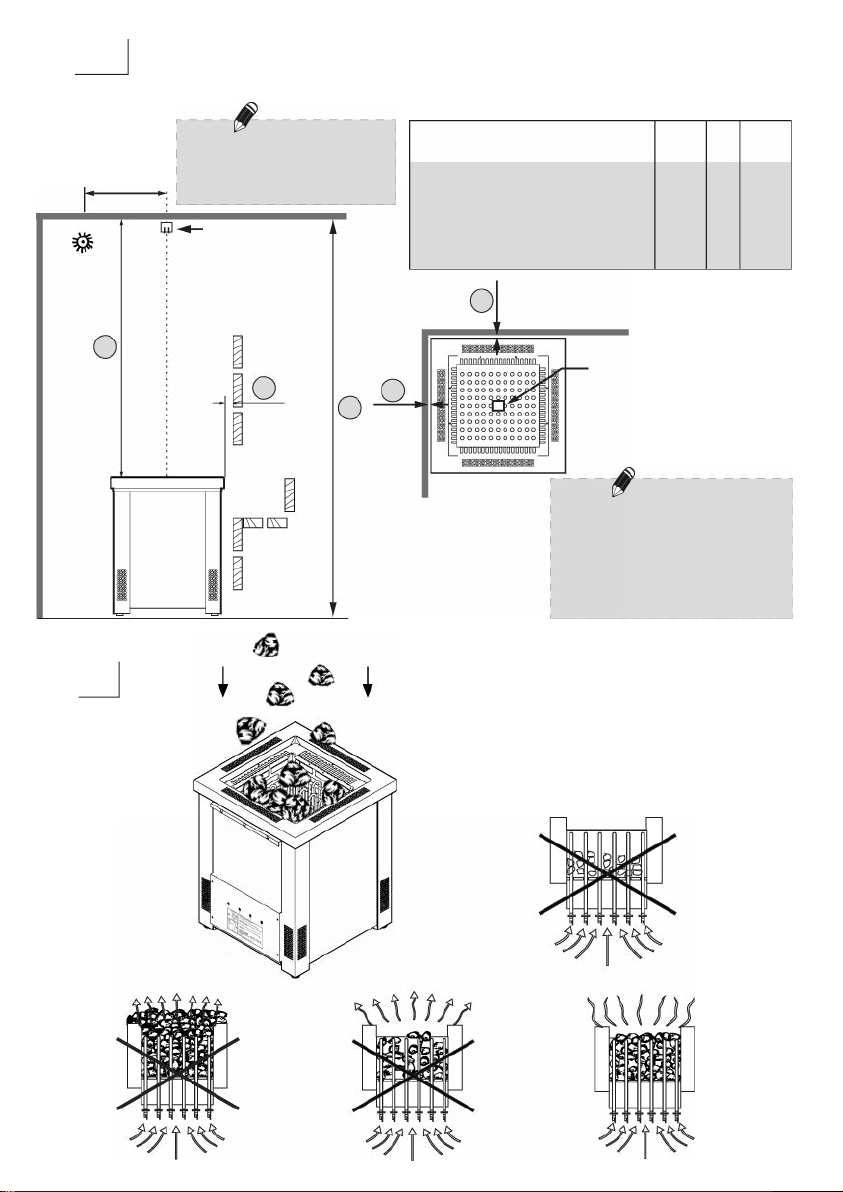
Loading stones into the heater
The main purpose of the stones in the heater unit is to store enough energy to
efficiently vaporize the water thrown on top of the stones to maintain correct
humidity in the sauna room.The stones must be removed at least once a year or
every 500 hours which ever occurs first. All stone crumbles must be removed from
the heater unit and replaced with new ones as described in the heater manual.
The required amount of stones is also listed in the manual provided. See Fig.9.
NOTE! Heating element damage due to overheating caused by wrong
kind of stones or stones which were wrongly loaded into the heater is
not covered by the factory warranty.
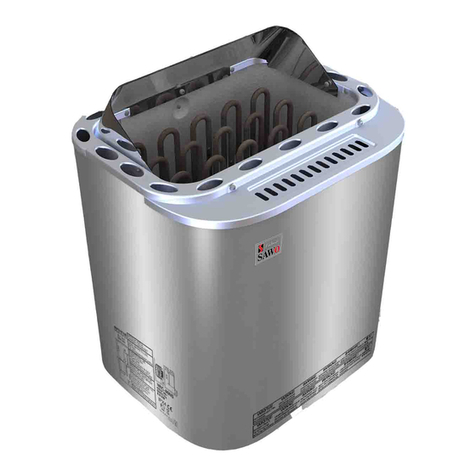
It is recommended that all stones should be rinsed to remove any stains or dust
that can cause unpleasant odour during the first few times of using the heater. It is
important that the stones are loaded carefully in a way that they do not block air
circulation through the heater. Larger stones that won’t fit between the heating
elements must not be forced in place instead they must be completely removed.
Small crumble or stone pieces smaller than 35mm in diameter must not be
loaded into the heater because they will block the air circulation and will cause
overheating and possible heating element damage.
NOTE! Never use the heater without stones as it may cause fire. Use
only manufacturer recommended SaWo-stones. Using unsuitable
stones may lead to heating element damage and will void the warranty.
Never use ceramic stones or other artificial stones of any type!
Air Vent
TOP VIEW
SENSOR
SENSOR
Min.
1000mm
5
max.500
ATAURUS TAURUS G-Model
1210
B
50
C
1900
1410 50 2100
TAU-90NS
TAU-105NS
TAU-90NS-G
TAU-105NS-G
TAU-120NS
TAU-150NS
TAU-180NS
TAU-180NS-V12
TAU-210NS-V12
TAU-240NS-V12
TAU-120NS-G
TAU-150NS-G
TAU-180NS-G
TAU-180NS-G-V12
TAU-210NS-G-V12
TAU-240NS-G-V12
A
B
B
B
C
Do not place the sensors too close
to airvents.
Follow these minimum distances:
- Non-directional airvent: 1000mm
- Directional airvent: 500mm