6
The following safety instrucons are addressed to both the
operator of the machine as well as the person in charge of
maintenance.
The machine has to be delivered only in perfect condions
of use by the Distributor to the user. The user shall operate
the machine only aer being well acquainted with the
safety procedures described in the present manual READ
THIS MANUAL CAREFULLY.
4.1 Basic Operaon Pracce
4.1.1 Danger
Some areas of the electric device have parts that are
connected or have parts connected to high voltage. These
parts when touched may cause severe electrical chocks or
even be fatal.
Never touch switches such as buons, turning switchs and
knobs with your hands wearing wet clothes and/or wet
shoes. By not following these instrucons operator could
be exposed to severe electrical shocks or even to a fatal
situaon.
4.1.2 Warnings
The operator has to be well familiar with the posion of ON/
OFF Switch to make sure the Switch is easy to be reached
when necessary. Before any kind of maintenance, physically
remove plug from the socket.
Provide space for a comfortable operaon thus avoiding
accidents.
Water or oil spilled on the floor will turn it slippery and
dangerous.
Make sure the floor is clean and dry to avoid accidents.
If any work is to be made by two or more persons,
coordinaon signs will have to be given for each operaon
step.
Every step of the operaon shall be taken only if a sign has
been made and responded.
4. Safety Noons
The change in the protecon system and the appliance
safety devices will lead to serious risks to physical integrity
of the people during operaon, cleaning, maintenance
and shipping according to ISO 12100 standard.
Acid soluons, salty soluons, disinfectants and some
sterilizing soluons (hypochlorites, tetravalent ammonia
salts, iodine compounds, nitric acid and others), must be
AVOIDED, once it cannot remain for long in contact with
the stainless steel.
These substances aack the stainless steel due to the
CHLORINE on its composion, causing corrosion spots
(ping).
Even detergents used in domesc cleaning must not remain
in contact with the stainless steel longer than the necessary,
being mandatory to remove it with plain water and then dry
the surface completely.
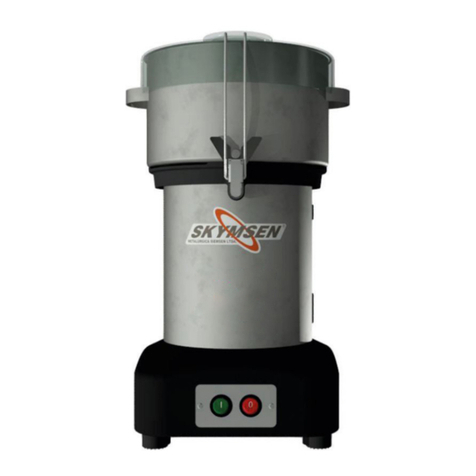
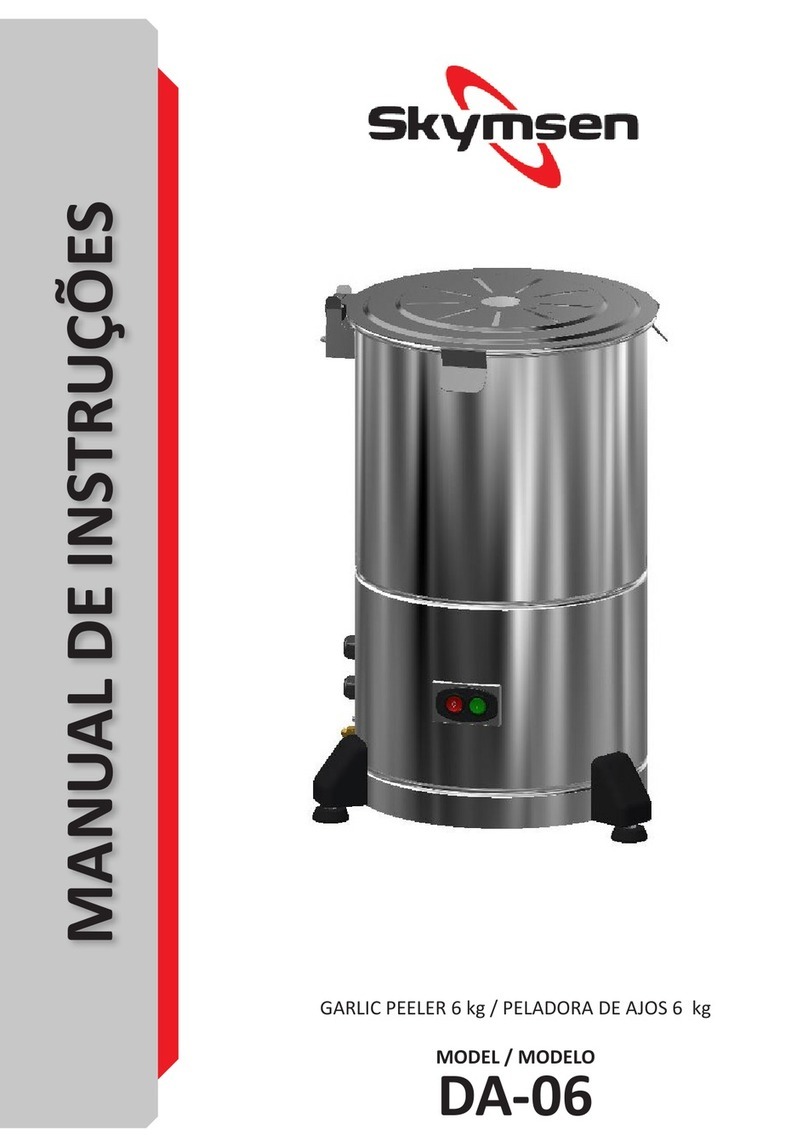
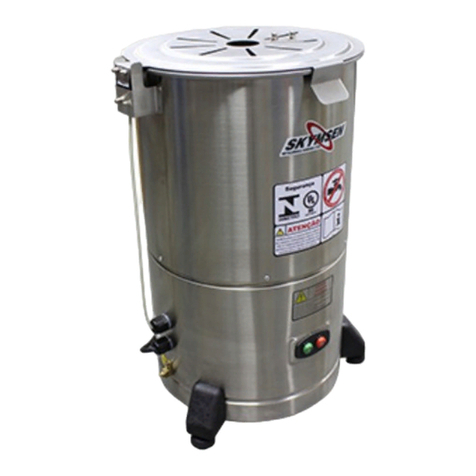
Some parts of the equipment may be removed to be
cleaned:
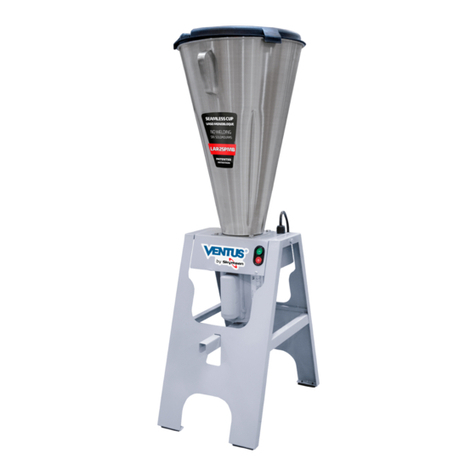
Lid
- The lid may be cleaned in running water and neutral
soap. Aer the cleaning, it is recommended to dry it with a
thin cloth to get a beer result. In order to avoid risks and
marks, do not use any abrasive product such as sponges or
thick cloth to clean the product.
Blade
- In order to clean the blade, it must be detached from the
main sha, pulling it up carefully. It may be cleaned with
running water and neutral soap. Be really careful with its
cung parts, once they are very sharp.
Cup
- The blade must be removed rst, in order to remove
the cup. Aer removing the blade, you must only li the
cup. The cup must also be washed with running water
and neutral soap, as long as the cup is not aached to the
machine.
- For other parts of the machine, as cabinet and cup support,
it is recommended to clean using a wet cloth.
Do not use direct water jet to the equipment.
3.5 Cauons with Stainless Steels
The Stainless Steel may present rust signs, which ARE
ALWAYS CAUSED BY EXTERNAL AGENTS, especially when
the cleaning or sanizaon is not constant and appropriate.
The Stainless Steel resistance towards corrosion is mainly
due to the presence of chrome, which in contact with
oxygen allows the formaon of a very thin protecve coat.
This protecve coat is formed through the whole surface of
the steel, blocking the acon of external corrosive agents.
When the protecve coat is broken, the corrosion process
begins, being possible to avoid it by means of constant and
adequate cleaning.
Cleaning must always be done immediately aer using the
equipment. For purpose, use water, mild soap or detergent,
and clean the equipment with a so cloth or a nylon sponge.
Then rinse it with plain running water, and dry immediately
with a so cloth, this way avoiding humidity on surfaces
and especially on gaps.
The rinsing and drying processes are extremely important
to prevent stains and corrosion from arising.
Use of abrasives:
Sponges or steel wools and carbon steel brushes, besides
scratching the surface and compromising the stainless
steel protecon, leave parcles that rust and react
contaminang the stainless steel. That is why such products
must not be used for cleaning and sanizaon. Scrapings
made with sharp instruments or similar must also be
avoided.
Main substances that cause stainless steel corrosion:
Dust, grease, acid soluons such as vinegar, fruit juices, etc.,
saltern soluons (brine), blood, detergents (except for the
neutral ones), common steel parcles, residue of sponges
or common steel wool, and also other abrasives.