manuals.online logo
Brands
  1. Home
  2. •
  3. Brands
  4. •
  5. Trix
  6. •
  7. Toy
  8. •
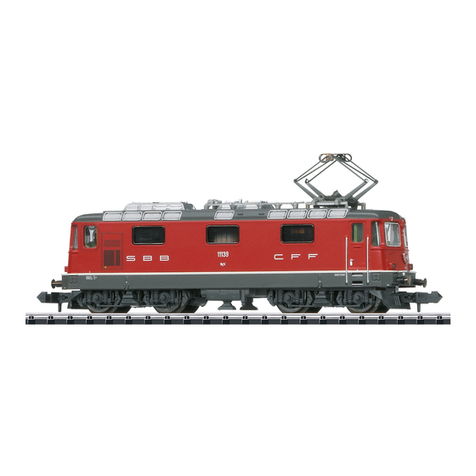
  9. Trix Minitrix Re 4/4 User manual

Trix Minitrix Re 4/4 User manual

Other Trix Toy manuals

Trix MINITRIX 16187 User manual

Trix

Trix MINITRIX 16187 User manual

Trix 110.3 Series User manual

Trix

Trix 110.3 Series User manual

Trix Dm3 User manual

Trix

Trix Dm3 User manual

Trix 23460 User manual

Trix

Trix 23460 User manual

Trix minitrix BR E 50 User manual

Trix

Trix minitrix BR E 50 User manual

Trix BR 50 User manual

Trix

Trix BR 50 User manual

Trix BR 52 User manual

Trix

Trix BR 52 User manual

Trix Minitrix 12265 User manual

Trix

Trix Minitrix 12265 User manual

Trix BR 45 User manual

Trix

Trix BR 45 User manual

Trix minitrix BR E 50 User manual

Trix

Trix minitrix BR E 50 User manual

Trix D XII User manual

Trix

Trix D XII User manual

Trix 16083 User manual

Trix

Trix 16083 User manual

Trix BR 41 User manual

Trix

Trix BR 41 User manual

Trix Minitrix 11629 User manual

Trix

Trix Minitrix 11629 User manual

Trix BB 426000 User manual

Trix

Trix BB 426000 User manual

Trix 21334 User manual

Trix

Trix 21334 User manual

Trix BR 132 User manual

Trix

Trix BR 132 User manual

Trix MINITRIX 16125 User manual

Trix

Trix MINITRIX 16125 User manual

Trix Minitrix BR 232 User manual

Trix

Trix Minitrix BR 232 User manual

Trix Minitrix BR 110 User manual

Trix

Trix Minitrix BR 110 User manual

Trix minitrix BR 111 User manual

Trix

Trix minitrix BR 111 User manual

Trix BR 01 150 User manual

Trix

Trix BR 01 150 User manual

Trix Re 460 Series User manual

Trix

Trix Re 460 Series User manual

Trix H0 3969 User manual

Trix

Trix H0 3969 User manual

Popular Toy manuals by other brands

marklin 37321 instruction manual

marklin

marklin 37321 instruction manual

Canon PAPER CRAFT Assembly instructions

Canon

Canon PAPER CRAFT Assembly instructions

GREAT PLANES Pitts M-12S instruction manual

GREAT PLANES

GREAT PLANES Pitts M-12S instruction manual

NOCH 14261 manual

NOCH

NOCH 14261 manual

Hausler 450 SE V2 quick start

Hausler

Hausler 450 SE V2 quick start

Dynaflite Daydream instruction manual

Dynaflite

Dynaflite Daydream instruction manual

Kenner Batman 63651 instructions

Kenner

Kenner Batman 63651 instructions

LEGO 8527 instructions

LEGO

LEGO 8527 instructions

Multiplex EasyStar II Building instructions

Multiplex

Multiplex EasyStar II Building instructions

iKarus ECO 8 Assembly instruction

iKarus

iKarus ECO 8 Assembly instruction

Walkera 38 User handbook

Walkera

Walkera 38 User handbook

Hasbro TRANSFORMERS BUMBLEBEE manual

Hasbro

Hasbro TRANSFORMERS BUMBLEBEE manual

MD MXION SWD user manual

MD

MD MXION SWD user manual

Mattel Disney Pixar Cars Cozy Cone Spiral Rampway instructions

Mattel

Mattel Disney Pixar Cars Cozy Cone Spiral Rampway instructions

marklin 39671 user manual

marklin

marklin 39671 user manual

LEGO TECHNIC 8735 instructions

LEGO

LEGO TECHNIC 8735 instructions

Mattel HOTWHEELS DWL04 instructions

Mattel

Mattel HOTWHEELS DWL04 instructions

REVELL Bristol Beaufighter TF.X Assembly manual

REVELL

REVELL Bristol Beaufighter TF.X Assembly manual

manuals.online logo
manuals.online logoBrands
  • About & Mission
  • Contact us
  • Privacy Policy
  • Terms and Conditions

Copyright 2025 Manuals.Online. All Rights Reserved.

Modell der
Re 4/4
2
Informationen zum Vorbild
Re 4/4‘‘ SBB / CFF / FFS
Die Schweizerischen Bundesbahnen (SBB) beschaff-
ten im Jahre 1964 die ersten sechs Lokomotiven der
Baureihe Re 4/4‘‘. Die Maschinen waren mit einer
Stundenleistung von 4 650 kW die bis dahin stärksten
vierachsigen Lokomotiven. Die erreichbare Höchstge-
schwindigkeit beträgt 140 km/h.
Den ersten sechs Lokomotiven folgten von 1967 bis
1986 weitere 270 Stück. Die Re 4/4‘‘ der SBB werden
in der ganzen Schweiz eingesetzt und tragen nach wie
vor die Hauptlast des Güter- und Personenverkehrs
der Schweiz. 1985 wurden die letzten Lokomotiven der
Reihe Re 4/4‘‘ an die SBB geliefert. Sie waren mit einer
neuen Beleuchtungsanlage mit Rechteck-Scheinwer-
fern und zuschaltbarem Fernlicht ausgerüstet.
Fast gleichzeitig wurde die Lackierung im neuen
Farbkonzept der SBB von Grün auf Rot umgestellt.
Bei vielen vorhandenen Lokomotiven wurden diese
Änderungen bei der Revision nachträglich ausgeführt.
Bald darauf erhielt auch die Reihe Re 4/4‘‘ die UIC-
Steckdose an der Stirnseite, die den Anschluß an die
genormten Steuer- und Kommunikations-Leitungen in
Reisezügen ermöglicht. Dazu kam ein seitlicher Auf-
stieg mit Handlauf, der den Anschluß besser zugänglich
macht. Mit diesem veränderten Antlitz präsentieren sich
heute die meisten Loks dieses Typs.
Information about the prototype
Re 4/4‘‘ SBB / CFF / FFS
In 1964 the Swiss Federal Railways (SBB) purchased
the first six class Re 4/4‘‘ locomotives. These locomo-
tives had a continuous output of 4,650 kilowatts (ap-
prox. 6,236 horsepower) and were the most powerful
four-axle locomotives at the last time. The maximum
speed was 140 km/h (approx. 88 mph).
From 1967 to 1986 another 270 units were added to
the original 6 locomotives. The SBB’s class Re 4/4‘‘
locomotives are used all over Switzerland, and are
the principal form of motive power for freight and
passenger trains in Switzerland. In 1985 the last of
the class Re 4/4‘‘ locomotives were delivered to the
SBB. They were equipped with a new headlight system
with rectangular lights and separately controlled long
distance headlights.
The paint scheme was changed by the SBB almost
at the same time from green to red. These changes
were carried out on many existing locomotives as they
came due for overhauls. Soon thereafter the class Re
4/4‘‘ was also equipped with the UIC receptacle on the
ends of the locomotives for connections to standard
control and communication lines in passenger trains.
A side step was also added to facilitate access to the
connections. Most of the locomotives in this class can
presently be seen with this new look.
3
Informations concernant le modèle réel
Re 4/4‘‘ SBB / CFF / FFS
Les Chemins de fer Fédéraux suisses (CFF) ont acquis
les six premières locomotives de la série Re 4/4 en
1964. Avec un débit horaire de 4 650 kW, les locomo-
tives étaient les machines à quatre essieux les plus
puissantes à cette date. La vitesse maximum atteinte
était de 140 km/h.
Les six premières locomotives ont été suivies de 270
unités supplémentaires entre 1967 et 1986. Les Re 4/4
des CFF sont utilisées partout en Suisse et supportent
toujours l’essentiel du frafic voyageurs et marchandi-
ses de la Suisse. C’est en 1985 que furent livrées les
dernières locomotives de la série Re 4/4‘‘ aux CFF. Elles
étaient équipées d’un nouveau dispositif d’éclairage
avec phares rectangulaires et phares de route commu-
tables.
Presque à la même époque, le nouveau concept des
couleurs des CFF eut pour conséquence l’abandon du
vert au profit du rouge. Pour de nombreuses locomoti-
ves existantes, ces modifications furent apportées par
la suite à l’occasion des travaux de révision. Peu de
temps après, la série Re 4/4‘‘ reçut également la prise
de courant frontale UIC qui permet de se raccorder aux
fils pilotes et aux lignes de communication normalisés
des trains voyageurs. A ceci s’ajouta une montée laté-
rale équipée d’une main courante pour faciliter l’accès
au raccordement. C’est avec ce nouveau visage que
se présentent aujourd’hui la plupart des locomotives
de ce type.
Informatie over het voorbeeld
Re 4/4‘‘ SBB / CFF / FFS
De Schweizerische Bundesbahnen (SBB) schaffen in
1964 de eerste zes lokomotieven van de serie Re 4/4‘‘
aan. De machines waren met een uurvermogen van 4
650 kW de tot dan toe sterkste vierassige lokomotie-
ven. De maximum snelheid is 140 km/h.
Na de eerste zes lokomotieven volgden van 1967 to
en met 1986 nog 270 exemplaren. De Re 4/4‘‘ van de
SBB wordt in geheel Zwitserland ingezet en vervoert
het leeuwedeel van het goederen- en personenverkeer
in Zwitserland.
In 1985 werden de laatste locomotieven van de serie
Re 4/4‘‘ aan de SBB geleverd. Ze waren met een nieu-
we verlichtingsinstallatie met rechthoekige schijnwer-
pers en inschakelbaar spotlicht uitgerust. Bijna tegelijk
werd de beschildering op het nieuwe kleurenconcept
van de SBB van groen op rood omgezet. Bij veel be-
staande locomotieven werden deze veranderingen bij
de revisie naderhand uitgevoerd.
Spoedig daarna kreeg ook de serie Re 4/4‘‘ de
UIC-contactdoos op het front die de aansluiting van
genormaliseerde regel- en communicatieleidingen in
reizigerstreinen mogelijk maakt. Daarvoor is ook een
loopplank aan de zijkant met handgreep aangebracht,
die de aansluiting beter toegankelijk maakt. Met dit
veranderde uiterlijk laten deze meeste locs van dit type
zich tegenwoordig zien.

4
Funktionen
- Auf Oberleitungsbetrieb umschaltbar.
- Dreilicht-Spitzensignal mit der Fahrtrichtung wech-
selnd.
- Lok mit digitaler Schnittstelle entsprechend NEM
651.
- Dieses TRIX-Modell ist entsprechend den gesetzli-
chen Vorschriften voll funk- und fernsehentstört.
- Zum Schutz des Modells ist eine elektronische Über-
lastsicherung eingebaut.
- Analog 14 Volt =, digital 22 Volt ~.
Functions
- Can be switched to catenary operation.
- Triple headlights that change over with the direction
of travel.
- Locomotive comes with NEM 651 digital connector.
- This TRIX model complies with the regulations con-
cerning suppression of interference with radio and
television reception.
- An electronic overload protection is built in to protect
the model.
- Analog 14 volts DC, digital 22 volts AC.
Functionnement
- Exploitation par caténaire possible.
- Feux triples avec alternace selon sens de marche.
- Locomotive avec interface digitale conforme à la
norme NEM 651.
- Ce modèle TRIX protégé contre l‘émission de
parasites radio et de télévision conformément aux
prescriptions légales.
- Une sécurité électronique protège le modèle contre
toute surcharge éventuelle.
- Analogique 14 volts =, digital 22 volts ~.
Functies
- Omschakelkbaar op bovenleiding.
- Drievoudige frontverlichting wisselent met de rijrich-
ting.
- Lok met stekkerverbinding voor digitale decoder
volgens NEM 651.
- Dit TRIX-model is, volgens de geldende voorschrif-
ten, geheel radio- en televisie-ontstoort.
- Voor de beweiliging van het models is een elektroni-
sche overbelastingsbeveiliging ingebouwd.
- Analog 14 Volt =, digital 22 Volt ~.
5
Schmierung nach etwa 50 Betriebsstunden
Lubricate after about 50 hours of operation
Graissage environ toutes les 50 heures de fonctionnement
Smeren na ongeveer 50 bedrijfsuren
Reinigung der Lokräder
Cleaning the locomotive wheels
Nettoyage des roues de locomotive
Reiniging van de wielen van de loc
66625 66626
O
I
L
66623
XIRTINIM
6
Lokgehäuse abnehmen
Removing the locomotive body
Enlever la caisse de locomotive
Loc-kap verwijderen
a
a
b
Drehgestelle auswechseln
Removing the trucks
Monter le bogie
Draaistellen vervangen
!!
7
!
a
a
b
b
c
c
d
d
e
15 0250 00 15 0350 00
Lampen auswechseln (a + b)
Replacement of bulbs (a + b)
Changer les ampoules (a + b)
Verwisselen van lampjes (a + b)
Motor ausbauen (a + c + d)
Remowing the motor (a + c + d)
Enlever le mateur (a + c + d)
Motor uitbouwen (a + c + d)
Motorbürsten auswechseln (e)
Changing motor brushes (e)
Remplacer les balais du moteur (e)
Koolborstels vervangen (e)
8
Umschalten auf Oberleitungsbetrieb
Switsching to catenary operation
Commutation sur caténaire
Omschakelen op bovenleidingsbedrijf
Bei Oberleitungsbetrieb beachten: Lok in Fahrtrichtung
1 (Führerstand 1) mit den linken Rädern auf die mit dem
blauen Kabel verbundene Schiene stellen.
Please note the following when operating from catena-
ry: Place locomotive in direction of travel 1 (engineer‘s
cab 1) with the left wheels on the rail connected to the
blue wire.
En exploitation par caténaire, tenez compte de ceci:
positionner la locomotive sur la voie dans le sens de
marche 1 (poste de conduite 1) avec les roues gauches
sur le rail raccordé au câble bleu.
Let op bij bovenleidingbedrijf: loc in rijrichting 1 (cabine
1) met de linker wielen op die rail plaatsen die verbon-
den is met de blauwe draad.
rot
rot
blau
1
9
Einbau des Lok-Decoders mit der schwarzen Verguß-
masse nach oben.

Installation of the locomotive decoder with the black
sealing compount facing up.
Montage du décodeur de locomotive avec la masse de
scellement noire vers le haut.
Inbouwen van de loc-decoder met de zwarte ingegoten
zijde naar boven.
m
m
5
b
ac
10
- Nicht für Betrieb auf Digitalanlagen ohne eingebau-
ten Lokdecoder.
- Die Lok darf nicht mit mehr als einer Leistungsquelle
gleichzeitig verbunden werden.
- Beachten Sie unbedingt die Sicherheitshinweise in
der Gebrauchsanleitung zu Ihrem Betriebssystem.
- Not suitable for operation on digital layouts without a
locomotive decoder installed in it first.
- The locomotive must not be connected to more than
one power source al a time.
- Pay close attention to the safty wrnings in the
instructions for your operating system.
- Pas pour exploization sur réseaux numériques sans
décodeur de locomotive intégré.
- La locomotive ne peut être alimentée que par une
seule source de courant à la fois.
- Veuillez impérativement respecter les remarques sur
la sécurité décrites dans le mode d’ emploi en ce qui
concerne le système d’ exploitation.
- Niet geschickt voor het gebruik op digitale banen
zunder ingebouwde loc-decoder.
- De loc mag niet met meer dan één stroombron
gelijktijdig verbonden worden.
- Lees ook aandachtig de veilighedsvoorschroften in
de gebruiksaanwijzing van uw beddrijfssysteem.