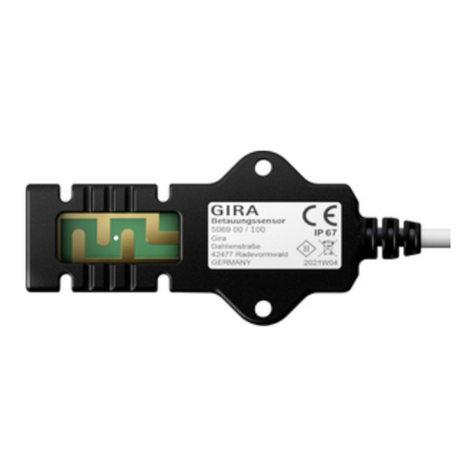
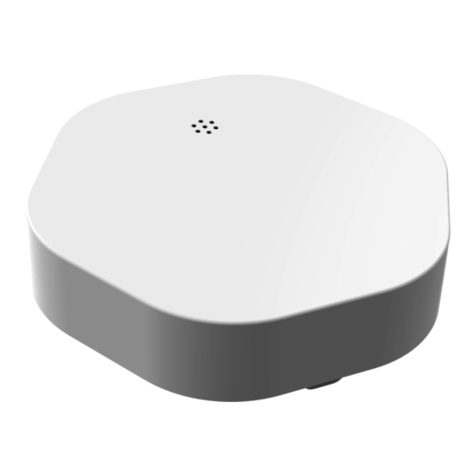
Leakage sensor
Function of the leakage sensor
The device monitors the electrical conductivity between the conductive coatings on the sensor
surface. If it is dampened with water, the device detects the change and signals it.
The device cannot prevent water from leaking, but detects and registers it early, so that
the impact of water damage can be kept minor.
The sensor surface can be damaged if it comes into contact with aggressive media (e.g.
detergent solutions, scrubbing brines or acidic condensation from condensing boilers).
Check the sensor area (3) every alarm. In case of significant damage from corrosion re-
place the device.
Application examples
In bathrooms or wet rooms:
– Below or next to the bathtub or shower
– Under the wash basin or behind vanities
In the kitchen area:
– Under the kitchen unit
– Under the dishwasher
– Under the sink
In utility rooms or functional spaces:
– Below or behind washing machines
– In boiler rooms
– In supply shafts with water pipes
– In cellar rooms with a risk of backflow
In living areas:
– Below or behind aquariums
– In the heating manifold of underfloor heating systems
4 Information for electrically skilled persons
4.1 Fitting and electrical connection
Fitting the leakage sensor
Figure3: Appropriate and inappropriate locations for fitting
Do not place the device on sloping surfaces, ridges or pedestals (Figure 3).
Look for an appropriate installation location at which escaping water can be detected early.
■ Place the device directly on the surface that is to be monitored. The sensor surface (3)
must point downwards.
■ Mount the device on the supporting surface, e.g. with a screw assembly, torque
max. 0.4 Nm
The vent opening (4) may not be used to mount the device.
For proper function, liquid must be able to reach the sensor surface (3).
2 / 4
82595832 19.07.2021