manuals.online logo
Brands
  1. Home
  2. •
  3. Brands
  4. •
  5. Trix
  6. •
  7. Toy
  8. •
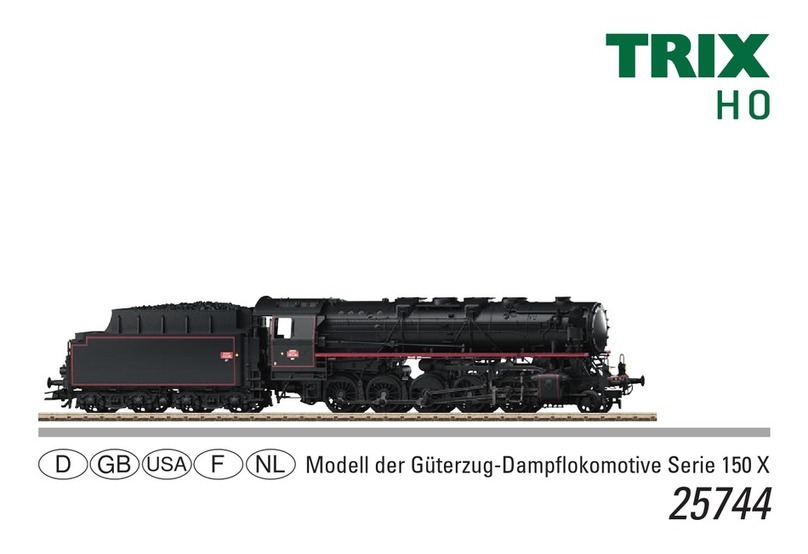
  9. Trix Dampflok 150X 22147 User manual

Trix Dampflok 150X 22147 User manual

Other Trix Toy manuals

Trix Litra E 991 User manual

Trix

Trix Litra E 991 User manual

Trix BR 42 User manual

Trix

Trix BR 42 User manual

Trix BR 89.70-75 22146 User manual

Trix

Trix BR 89.70-75 22146 User manual

Trix 23460 User manual

Trix

Trix 23460 User manual

Trix ES 64 U2 User manual

Trix

Trix ES 64 U2 User manual

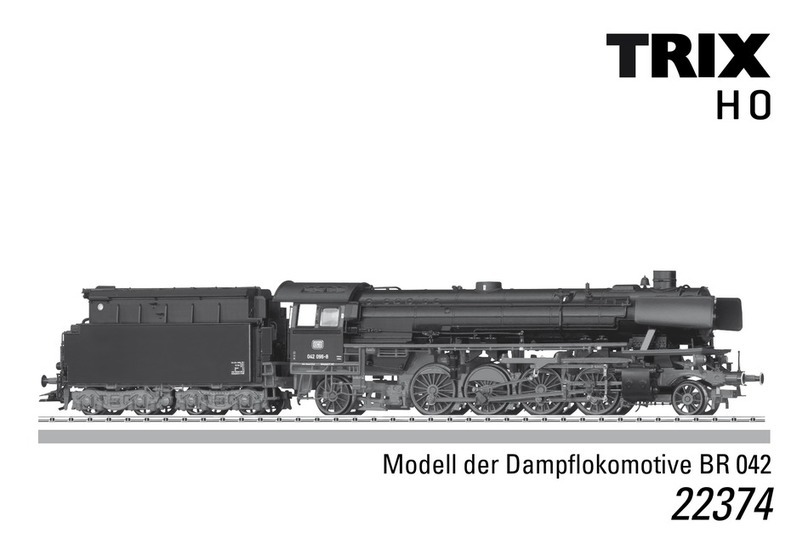
Trix BR 042 User manual

Trix

Trix BR 042 User manual

Trix VT 10.5 User manual

Trix

Trix VT 10.5 User manual

Trix BR 74 User manual

Trix

Trix BR 74 User manual

Trix h0 series User manual

Trix

Trix h0 series User manual

Trix CC 40100 Series User manual

Trix

Trix CC 40100 Series User manual

Trix 21334 User manual

Trix

Trix 21334 User manual

Trix BR 103 / E 03 User manual

Trix

Trix BR 103 / E 03 User manual

Trix 64 Series User manual

Trix

Trix 64 Series User manual

Trix Re 4/4I User manual

Trix

Trix Re 4/4I User manual

Trix Dampfschneeschleuder User manual

Trix

Trix Dampfschneeschleuder User manual

Trix E.T. 501-506 Series User manual

Trix

Trix E.T. 501-506 Series User manual

Trix BR 280 User manual

Trix

Trix BR 280 User manual

Trix Minitrix MaK G 1000 BB User manual

Trix

Trix Minitrix MaK G 1000 BB User manual

Trix BR 380 CD User manual

Trix

Trix BR 380 CD User manual

Trix MINITRIX Stadthaus User manual

Trix

Trix MINITRIX Stadthaus User manual

Trix BR 234 User manual

Trix

Trix BR 234 User manual

Trix Minitrix BR 03.10 User manual

Trix

Trix Minitrix BR 03.10 User manual

Trix minitrix V80, BR 280 User manual

Trix

Trix minitrix V80, BR 280 User manual

Trix Minitrix 66382 User manual

Trix

Trix Minitrix 66382 User manual

Popular Toy manuals by other brands

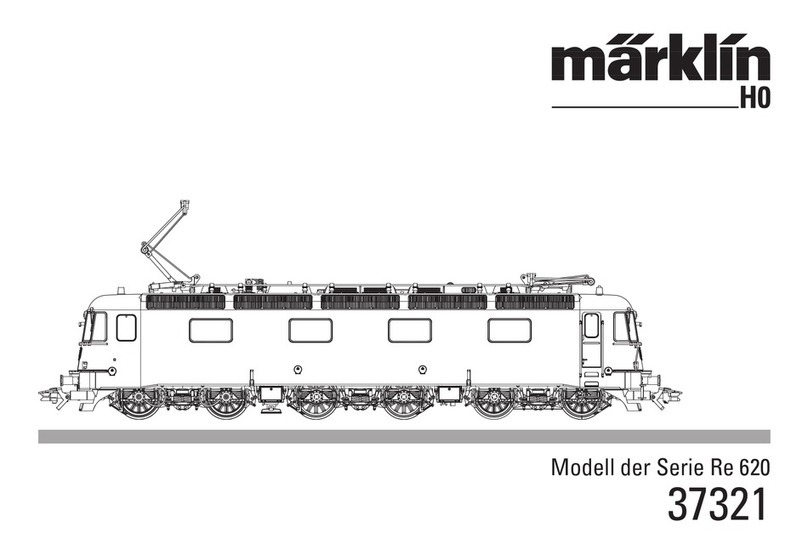
marklin 37321 instruction manual

marklin

marklin 37321 instruction manual

Canon PAPER CRAFT Assembly instructions

Canon

Canon PAPER CRAFT Assembly instructions

GREAT PLANES Pitts M-12S instruction manual

GREAT PLANES

GREAT PLANES Pitts M-12S instruction manual

NOCH 14261 manual

NOCH

NOCH 14261 manual

Hausler 450 SE V2 quick start

Hausler

Hausler 450 SE V2 quick start

Dynaflite Daydream instruction manual

Dynaflite

Dynaflite Daydream instruction manual

Kenner Batman 63651 instructions

Kenner

Kenner Batman 63651 instructions

LEGO 8527 instructions

LEGO

LEGO 8527 instructions

Multiplex EasyStar II Building instructions

Multiplex

Multiplex EasyStar II Building instructions

iKarus ECO 8 Assembly instruction

iKarus

iKarus ECO 8 Assembly instruction

Walkera 38 User handbook

Walkera

Walkera 38 User handbook

Hasbro TRANSFORMERS BUMBLEBEE manual

Hasbro

Hasbro TRANSFORMERS BUMBLEBEE manual

MD MXION SWD user manual

MD

MD MXION SWD user manual

Mattel Disney Pixar Cars Cozy Cone Spiral Rampway instructions

Mattel

Mattel Disney Pixar Cars Cozy Cone Spiral Rampway instructions

marklin 39671 user manual

marklin

marklin 39671 user manual

LEGO TECHNIC 8735 instructions

LEGO

LEGO TECHNIC 8735 instructions

Mattel HOTWHEELS DWL04 instructions

Mattel

Mattel HOTWHEELS DWL04 instructions

REVELL Bristol Beaufighter TF.X Assembly manual

REVELL

REVELL Bristol Beaufighter TF.X Assembly manual

manuals.online logo
manuals.online logoBrands
  • About & Mission
  • Contact us
  • Privacy Policy
  • Terms and Conditions

Copyright 2025 Manuals.Online. All Rights Reserved.

Modell der Dampfl ok 150X
22147
BD Regensburg
Bw Weiden
44 333
2
Information zum Vorbild
Schon im ersten Beschaffungsplan der neugegründeten Deut-
schen Reichsbahn (DRG) war eine schwere Güterzuglokomotive
mit fünf gekuppelten Achsen und 20 t Achslast vorgesehen. Die
Ausrüstung mit zwei oder drei Zylinder stand zur Diskussion.
Daher wurden im Jahr 1926 je zehn Maschinen mit zwei Zylinder
als Baureihe BR 43 und drei Zylinder als BR 44 gebaut. Nach
verschiedenen konstruktiven Änderungen wurden erst von 1937
bis 1944 insgesamt 1753 Einheiten der BR 44 für die DRG gebaut.
Bei beiden deutschen Bahnen bildeten die Loks der BR 44 in der
Nachkriegszeit das Rückgrat der Güterzugförderung. Bei der
Deutschen Reichsbahn (DR) wurden die Maschinen zum Teil auf
Ölhaupt- oder auf Kohlenstaubfeuerung umgebaut. Auch bei der
Deutschen Bundesbahn (DB) erhielten 32 Loks eine Ölfeuerung.
Die französischen Kohlevorkommen in Lothringen sicherten viele
Jahre und ganz besonders in der unmittelbaren Nachkriegszeit
die Energieversorgung von Paris. Täglich fuhren schwerste
Kohlezüge von den Bergwerken in die Hauptstadt. Um die relativ
weite Strecke ohne große Zwischenhalte so schnell wie möglich
überbrücken zu können, fuhr eine zweite Lokmannschaft in einem
eigens hergerichteten Mannschaftswagen, dem so genannten
„Campingwagen“, mit und konnte so die erste Mannschaft
unterwegs ablösen. Die Kohlewagen bestanden in Ende der
40er-Jahre aus den unterschiedlichsten Bauarten zweiachsiger
offener Güterwagen.
Information about the Prototype
A heavy freight locomotive with five coupled axles and a 20 ton
axle load was part of the first procurement plans of the newly
founded German State Railroad (DRG). There was a debate
regarding whether it should have two or three cylinders, and
accordingly ten units each with two cylinders as the class 43
and with three cylinders as the class 44 were built in 1926. After
various design changes total of 1,753 units of the class 44 were
built from 1937 to 1944 for the DRG.
On the German railways the class 44 locomotives formed the
backbone of freight transport motive power in the postwar
period. On the German State Railroad (DR) some of these units
were converted to mostly oil firing and to coal powder firing.
Thirtytwo units on the German Federal Railroad (DB) were also
equipped for oil firing.
The French coal beds in Lorraine ensured the supply of energy
for Paris for many years and particularly in the immediate
postwar period. Very heavy coal trains went daily from the mines
to the capital city. A second locomotive crew rode in a crew car
specially set up for the purpose so that the relatively long route
could be traversed as quickly as possible without long intermedi-
ate stops. The crew car for the second crew was a so-called
„camping car“ and the second crew could spell the first crew
during the run. At the end of the Forties, the coal cars consisted
of all kinds of different designs of two-axle gondolas.
3
Informations concernant la locomotive réele
Le premier plan d’acquisition des Chemins de fer nouvellement
créés de la Deutsche Reichsbahn (DRG) prévoyait déjà une
locomotive lourde pour trains de marchandises avec cinq essieux
accouplés et une charge axiale de 20 t. L’équipement avec deux
ou trois cylindres a été discuté, raison pour laquelle dix machines
à deux cylindres ont été construites en 1926 en guise de série BR
13, ainsi que dix machines à trois cylindres en guise de série BR
44. Après plusieurs modifications de la construction, 1753 unités
de la BR 44 ont été construites pour les Chemins de fer de la
Deutsche Reichsbahn entre 1937 et 1944.
Dans les deux Chemins de fers allemands, les locomotives de la
série BR 44 ont constitué la colonne vertébrale du transport de
marchandises durant la période de l’aprés-guerre. Les Chemins
de fer de la Deutsche Reichsbahn (DR) ont adapté une partie des
machines à un chauffage principal à l’huile ou à la poussière de
charbon. Les Chemins de fer de la Deutsche Bundesbahn ont eux
aussi doté 32 locomotives d’un chauffage à l’huile.
Durant de nombreuses années et tout particulièrement juste
après la guerre, l‘alimentation en énergie de Paris fut assurée par
les gisements de charbon français en Lorraine. De lourds trains
de charbon circulaient tous les jours entre les mines et la capi-
tale. Afin d’assurer le parcours le plus rapidement possible sans
trop d’arrêts intermédiaires, une seconde équipe accompagnait le
convoi dans une voiture spécialement aménagée à cet effet, la «
voiture camping » afin de pouvoir remplacer la première en cours
de route. A la fin des années 1940, les wagons pour le transport
du charbon rassemblaient les types les plus divers de tombereaux
à deux essieux
.
Informatie van het voorbeeld
Reeds in de eerste plannen voor de aanschaf van nieuw mate-
rieel had de pas opgerichte Deutsche Reichsbahn (DRG) een
zware goederentreinlokomotief met vijf gekoppelde assen en 20
ton aslast opgenomen. De uitvoering met twee of drie cilinders
stond ter discussie en daarom werden er in 1926 tien machines
met twee cilinders als serie BR 43 en tien machines met drie
cilinders als serie BR 44 gebouwd. Na diverse constructieve
veranderingen werden pas vanaf 1937 tot 1944 in totaal 1753
eenheden van de serie 44 voor de DRG gebouwd.
Bij de Duitse spoorwegen vormden de loks van de serie 44 in
de naoorlogse tijd de ruggegraat bij het goederentransport. Bij
de Deutsche Reichsbahn (DR) werden de machines voor een
deel omgebouwd naar olie als belangrijkste brandstof of voor de
verbranding van koolstof. Ook bij de Deutsche Bundesbahn (DB)
kregen 32 loks oliestook.
De Franse kolenvoorraden in Lotharingen garandeerden
gedurende vele jaren en vooral in de tijd direct na de oorlog de
energieverzorging van Parijs. Dagelijks reden de zwaarste kolen-
treinen van de mijnen naar de hoofdstad. Om het relatief verre
traject zonder al te grote tussenstops zo snel mogelijk te kunnen
overbruggen, reed een tweede schift personeel in een zelf
ingericht personeelsrijtuig, de zogenaamde ‘Campingrijtuigen’,
mee en zo kon de eerste schift onderweg afgelost worden. De
kolenwagens bestonden eind jaren ’40 uit de meest verscheiden
typen tweeassige open goederenwagens.

4
Technische Ausstattung:
• Eingebaute Elektronik zum wahlweisen Betrieb mit konventio-
nellem Gleichstrom-Fahrgerät (max. ±12 Volt),
Trix Systems oder Digitalsystemen nach NMRA-Norm.
• Automatische Systemerkennung zwischen Digital- und
Analog-Betieb.
• Fahrtrichtungsabhängige Spitzenbeleuchtung.
Im Digitalbetrieb schaltbar.
Die bei normalem Betrieb anfallenden Wartungsarbeiten sind
nachfolgend beschrieben. Für Reparaturen oder Ersatzteile
wenden Sie sich bitte an Ihren Trix-Fachhändler.
Sicherheitshinweise
• Für den konventionellen Betrieb der Lok muss das Anchluss-
gleis entstört werden. Dazu ist das Entstörset 611 655 zu ver-
wenden. Für Digitalbetrieb ist das Entstörset nicht geeignet.
• Die Lok darf nur mit einem dafür bestimmten Betriebssystem
eingesetzt werden.
Hinweise zum Digitalbetrieb:
• Ab Werk ist bei dieser Lok für den Digitalbetrieb die Adresse
„03“ (DCC) programmiert. Eingestellte Anzahl der Fahrstufen:
28 (DCC) .
• Der Betrieb mit gegenpoliger Gleichspannung im Bremsab-
schnitt ist mit der werkseitigen Einstellung nicht möglich.
Ist diese Eigenschaft gewünscht, so muss auf den konventio-
nellen Gleichstrombetrieb verzichtet werden (CV29 / Bit 2 = 0)
• Funktion:
F0 Stirnbeleuchtung
F1 Rauchgenerator
F2 —
F3 Betriebsgeräusch
F4 Direktsteuerung ABV
F5 Geräusch: Lokpfeife lang
F6 Geräusch: Luftpumpe
F7 Geräusch: Injektor
F8 —
F9 Geräusch: Rangierpfiff
F10 Geräusch: Dampf ablassen
F11 Geräusch: Kohle schaufeln
F12 Geräusch: Schüttelrost
• Fehlfunktionen, die durch Änderung der werkseitigen
Einstellungen der Lokelektronik verursacht werden, sind vom
Bediener selbst verursacht und damit kein Reklamationsgrund
bezüglich der Garantie- oder Gewährleistungsansprüche.
Jegliche Garantie-, Gewährleistungs- und Schadensersatzansprüche
sind ausgeschlossen, wenn in Trix-Produkten nicht von Trix freigegebene
Fremdteile eingebaut werden und/oder Trix-Produkte umgebaut werden
und die eingebauten Fremdteile bzw. der Umbau für sodann aufgetretene
Mängel und/oder Schäden ursächlich war. Die Darlegungs- und Beweislast
dafür, dass der Einbau von Fremdteilen oder der Umbau in bzw. von Trix-
Produkten für aufgetretene Mängel und/oder Schäden nicht ursächlich
war, trägt die für den Ein- und/oder Umbau verantwortliche Person
und/oder Firma bzw. der Kunde.
5
*** Die Werte der gewünschten Einstellungen sind zu addieren!
CV
Bedeutung Wert DCC ab Werk
1 Adresse 1 - 127 3
2Minimalgeschwindigkeit 0 - 15 4
3 Anfahrverzögerung 0 - 127 8
4 Bremsverzögerung 0 - 127 6
5 Maximalgeschwindigkeit 0 - 255 64
8 Werksreset 8 131
17 Erweiterte Adresse (oberer Teil) CV 29, bit 5 =1 192
18 Erweiterte Adresse (unterer Teil) CV 29, bit 5 =1 0
29
bit 0: Umpolung Fahrtrichtung
bit 1: Anzahl Fahrstufen 14 oder 28/128
bit 2: DCC Betrieb mit Bremsstrecke oder Gleichstrombetrieb
bit 5: Adressumfang 7 bit / 14 bit
Wert
0 / 1
0 / 2
0 / 4
0 / 32
***
0, 1, 2, 3, 4, 5, 6, 7,
32, 34, 35, 36, 37,
38, 39
4
6
Technical Features:
• Built-in electronic circuit for operation with a conventional
DC power pack (max. ±12 volts), Trix Systems or NMRA
DCC digital systems.
• Automatic system recognition between digital and analog
operation.
• Headlights for the locomotive change over with the
direction of travel. They can be turned on and off in digital
operation.
The necessary maintenance that will comes due with normal
operation is described below. Please see your authorized Trix
dealer for repairs or spare parts.
Safety Warnings
• The feeder track must be equipped to prevent interference with
radio and television reception, when the locomotive is to be run in
conventional operation. The 611 655 interference suppression set is
to be used for this purpose. The inter-ference suppression set is not
suitable for digital operation.
• This locomotive is to be used only with an operating system
designed for it.
Notes on digital operation:
• This locomotive comes from the factory programmed for
the digital address “03” (DCC). Number of speed levels that
have been set:28 (DCC)
• Information about DCC Operation:
The setting done at the factory does not permit operation
with opposite polarity DC power in the braking block. If you
want this characteristic, you must do without conventional
DC power operation (CV29 / Bit 2 = 0).
• Function:
F0 Headlights
F1 Smoke generator
F2 —
F3 Sound effect: Operating sounds
F4 Direct control (ABV)
F5 Sound effects: Long locomotive whistle
F6 Sound effect: Air pump
F7 Sound effect: Injector
F8 —
F9 Sound effect: Switching whistle
F10 Sound effect: Blowing off steam
F11 Sound effect: Coal being shoveled
F12 Sound effect: Rocker grate
• Malfunctions resulting from changes to the factory settings
of the locomotive electronics are caused by the operator
and do not give grounds for complaint under our guarantee
or warranty obligations.
No warranty or damage claims shall be accepted in those cases where
parts neither manufactured nor approved by Trix have been installed in
Trix products or where Trix products have been converted in such a way
that the non-Trix parts or the conversion were causal to the defects and/
or damage arising. The burden of presenting evidence and the burden of
proof thereof, that the installation of non-Trix parts or the conversion in
or of Trix products was not causal to the defects and/or damage arising,
is borne by the person and/or company responsible for the installation
and/or conversion, or by the customer.
7
*** The values for the desired settings must be added.
CV
Discription DCC Value
Factory Setting
DCC
1 Adress 1 - 127 3
2 Minimum speed 0 - 15 4
3 Acceleration delay 0 - 127 8
4 Braking delay 0 - 127 6
5 Maximum speed 0 - 255 64
8 Factory Reset 8 131
17 Extended address (upper part) CV 29, bit 5 =1 192
18 Extended address (lower part) CV 29, bit 5 =1 0
29
bit 0: Travel direction polarity reversal
bit 1: number of speed levels 14 or 28/128
bit 2: DCC Operation with braking Block. DC power Operation
bit 5: Adress size 7 bit / 14 bit
Value
0 / 1
0 / 2
0 / 4
0 / 32
***
0, 1, 2, 3, 4, 5, 6, 7,
32, 34, 35, 36, 37,
38, 39
4
8
• Fonction:
F0 Fanal
F1 Générateur de fumée
F2 —
F3 Bruitage : Bruit d’exploitation
F4 Temporisation d’accélération et de freinage
F5 Bruitage : sifflet long
F6 Bruitage : Compresseur
F7 Bruitage : Injecteur
F8 —
F9 Bruitage : Sifflet pour manœuvre
F10 Bruitage : Échappement de la vapeur
F11 Bruitage : Pelletage du charbon
F12 Bruitage : Grille à secousses
• Les défaillances au niveau du fonctionnement, découlant
de la modification des réglages faits en usine sur le
système électronique de la locomotive, sont déclenchées
par l‘opérateur et ne constituent par conséquent aucune
raison de réclamation; elles ne donnent de ce fait aucun
droit de recours en garantie contractuelle ou commercia-
le.
Tout recours à une garantie commerciale ou contractuelle ou à une
demande de dommages-intérêt est exclu si des pièces non autorisées
par Trix sont intégrées dans les produits Trix et/ou si les produits Trix sont
transformés et que les pièces d’autres fabricants montées ou la transfor-
mation constituent la cause des défauts et/ou dommages apparus. C’est à

la personne et/ou la société responsable du montage/ de la transformation
ou au client qu’incombe la charge de prouver que le montage des pièces
d’autres fabricants sur des produits Trix ou la transformation des produits
Trix n’est pas à l’origine des défauts et ou dommages apparus.
Equipement technique:
• Electronique intégrée pour exploitation au choix avec
transformateur-régulateur conventionnel délivrant du courant
continu (max. ±12 volts), Trix Systems
ou avec des systèmes
de conduite digitale conformes aux normes NMRA.
• Reconnaissance automatique du système entre exploitations
numérique et analogique.
• Feux de signalisation s’inversant selon le sens de marche;
feux commutables en exploitation digital.
Les travaux d’entretien dus à un usage normal sont décrits
ci-dessous. Adressez-vous à votre revendeur Trix pour les
réparations et les pièces de rechange.
Remarques importantes sur la sécurité
• Pour l’exploitation de la locomotive en mode conventionnel, la voie
de raccordement doit être déparasitée. A cet effet, utiliser le set de
déparasitage réf. 611 655. Le set de déparasitage ne convient pas pour
l’exploitation en mode numérique.
• La locomotive ne peut être mise en service qu’avec un systè-
me d’exploitation adéquat.
Remarques relatives au fonctionnement en mode digital:
• En usine, c’est l‘adresse «03» (DCC), qui est programmée
pour une exploitation digitale de cette locomotive. Nombre de
crans de marche encodés: 28 (DCC) .
• Remarque concernant l’exploitation DCC: L’exploitation avec courant
continu de polarité inverse dans les sections de freinage n’est pas
possible avec le réglage d’usine. Si cette propriété est désirée, il faut
alors renoncer à l’exploitation conventionnelle en courant continu
(CV29 / bit 2 = 0).
9
*** Les valeurs des réglages désirés sont à additioner.
CV
Signification Vaieur DCC Valeur Parm. Usine
DCC
1 Adresse 1 - 127 3
2 Vitesse minimale 0 - 15 4
3 Temporisation d‘accélération 0 - 127 8
4 Temporisation de freinage 0 - 127 6
5 Vitesse maximale 0 - 255 64
8 Réinitialisation d’usine 8 131
17 Adresse étendue (partie supérieure) CV 29, bit 5 =1 192
18 Adresse étendue (partie inférieure) CV 29, bit 5 =1 0
29 bit 0: inversion de polarité, sens de marche
bit 1: Nombre de crans de marche 14 ou 28/128
bit 2: Exploitation DCC avec zone de freinage. DCC et courant continu
bit 5: taille d‘adresse 7 bit / 14 bit
Vaieur
0 / 1
0 / 2
0 / 4
0 / 32
***
0, 1, 2, 3, 4, 5, 6, 7,
32, 34, 35, 36, 37,
38, 39
4
10
Technische uitvoering:
• Ingebouwde elektronica die het mogelijk maakt om naar keu-
ze met, een conventionele gelijkstroomrijregelaar (max. ±12
Volt), Trix Systems of digitaalsysteem volgens NMRA-norm te
rijden.
• Automatische systeemherkenning tussen digitaal- en ana-
loogbedrijf.
• Rijrichtingsafhankelijke verlichting is in het digitaalsysteem
schakelbaar.
De bij normaal gebruik noodzakelijke onderhoudspunten wor-
den verderop beschreven. Voor reparaties en onderdelen kunt
zich tot Uw Trix handelaar wenden.
Veiligheidsvoorschriften
• Voor het conventionele bedrijf met de loc dient de aanslu-
itrail te worden ontstoort. Hiervoor dient men de ontstoor-
set 611 655 te gebruiken. Voor het digitale bedrijf is deze
ontstoor-set niet geschikt.
• De loc mag alleen met een daarvoor bestemd bedrjfssys-
teem gebruikt worden.
Aanwijzingen voor digitale besturing:
• Vanaf de fabriek is deze loc geprogrammeerd op het digitale
adres “03” (DCC). Ingestelde rijstappen: 28 (DCC)
• Opmerking voor het DCC-bedrijf:
het bedrijf met tegengepoolde gelijkspanning in de afrem-
sectie is met de fabrieksinstelling niet mogelijk. Indien deze
eigenschap wenselijk is, dan moet worden afgezien van het
conventioneel gelijkstroombedrijf (CV29 / bit 2 = 0).
• Functie:
F0 Frontverlichting
F1 Rookgenerator
F2 —
F3 Geluid: bedrijfsgeluiden
F4 Directe aansturing optrek- afrem vertraging (ABV)
F5 Geluid: fluit lang
F6 Geluid: luchtpomp
F7 Geluid: injecteur
F8 —
F9 Geluid: rangeerfluit
F10 Geluid: stoom afblazen
F11 Geluid: kolenscheppen
F12 Geluid: schudrooster
• Functiestoringen die door wijziging van de fabrieksmatige
instellingen van loc-elektronica veroorzaakt worden, zijn
aan de gebruiker zelf te wijten en derhalve geen gerede
grond voor reclamering op basis van de garantie- en
aansprakelijkheidsaanspraken.
Elke aanspraak op garantie en schadevergoeding is uitgesloten, wan-
neer in Trix-producten niet door Trix vrijgegeven vreemde onderdelen
ingebouwd en/of Trix-producten omgebouwd worden en de ingebouwde
vreemde onderdelen resp. de ombouw oorzaak van nadien opgetreden
defecten en/of schade was. De aantoonplicht en de bewijslijst daarom-
trent, dat de inbouw van vreemde onderdelen in Trix-producten of de
ombouw van Trix-producten niet de oorzaak van opgetreden defecten
en/of schade is geweest, berust bij de voor de inbouw en/of ombouw
verantwoordelijke persoon en/of firma danwel bij de klant.