manuals.online logo
Brands
  1. Home
  2. •
  3. Brands
  4. •
  5. Hubbell
  6. •
  7. Lighting Equipment
  8. •
  9. Hubbell Dual-Lite EVHC-BC Series Manual

Hubbell Dual-Lite EVHC-BC Series Manual

Other Hubbell Lighting Equipment manuals

Hubbell Compass CU2SO User manual

Hubbell

Hubbell Compass CU2SO User manual

Hubbell KIM LIGHTING VRB1 User manual

Hubbell

Hubbell KIM LIGHTING VRB1 User manual

Hubbell Dual-Lite EV4D-02WAL Series Manual

Hubbell

Hubbell Dual-Lite EV4D-02WAL Series Manual

Hubbell Dual Lite EZ-2R Series Manual

Hubbell

Hubbell Dual Lite EZ-2R Series Manual

Hubbell Laredo LMC User manual

Hubbell

Hubbell Laredo LMC User manual

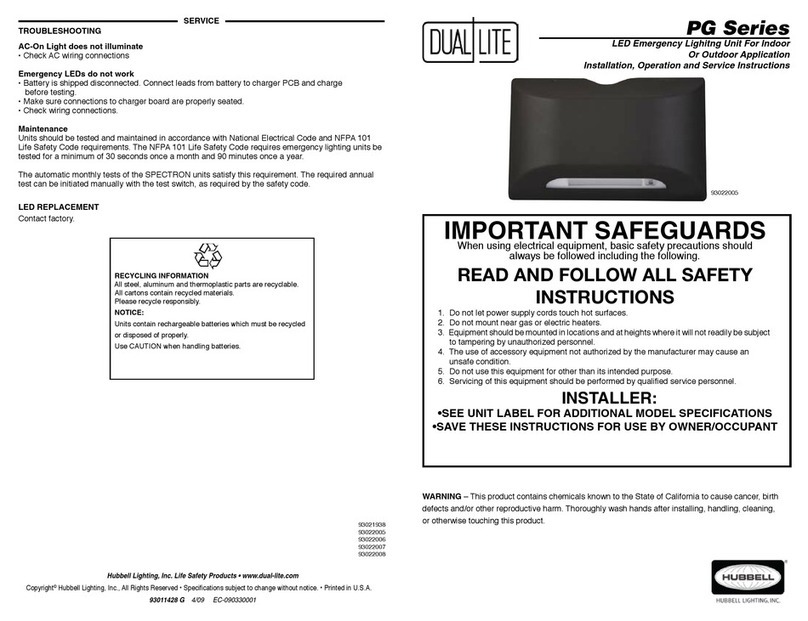
Hubbell DUAL LITE PG Series User manual

Hubbell

Hubbell DUAL LITE PG Series User manual

Hubbell Dual Lite EV Series Manual

Hubbell

Hubbell Dual Lite EV Series Manual

Hubbell KIM LIGHTING LIGHTVAULT LTV55 User manual

Hubbell

Hubbell KIM LIGHTING LIGHTVAULT LTV55 User manual

Hubbell NutriLED Series User manual

Hubbell

Hubbell NutriLED Series User manual

Hubbell Litecontrol 22L Series User manual

Hubbell

Hubbell Litecontrol 22L Series User manual

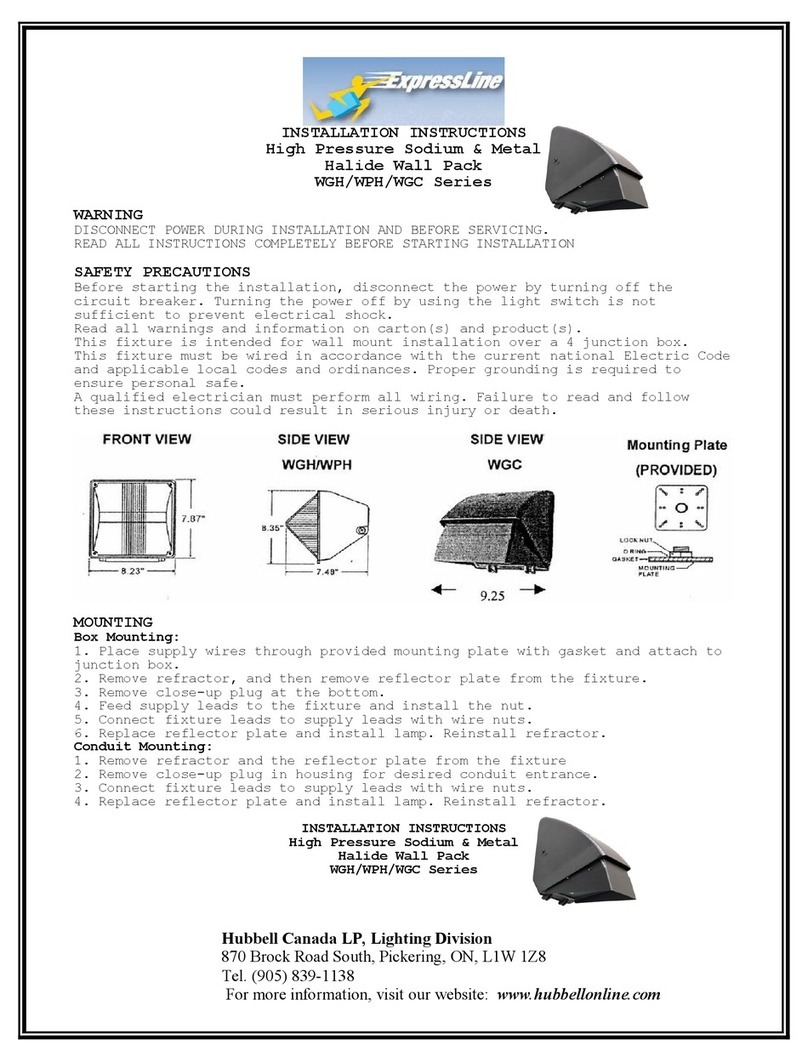
Hubbell WPH Series User manual

Hubbell

Hubbell WPH Series User manual

Hubbell SAVVANO User manual

Hubbell

Hubbell SAVVANO User manual

Hubbell KILLARK VEB Series Instruction Manual

Hubbell

Hubbell KILLARK VEB Series Instruction Manual

Hubbell ExpressLine Miniliter IV MHSY Series User manual

Hubbell

Hubbell ExpressLine Miniliter IV MHSY Series User manual

Hubbell Prescolite LBSLEDA User manual

Hubbell

Hubbell Prescolite LBSLEDA User manual

Hubbell VSLT-UP User manual

Hubbell

Hubbell VSLT-UP User manual

Hubbell Dual-Lite DYNC C1D2 Series User manual

Hubbell

Hubbell Dual-Lite DYNC C1D2 Series User manual

Hubbell G040 Instruction Manual

Hubbell

Hubbell G040 Instruction Manual

Hubbell Laredo LMC User manual

Hubbell

Hubbell Laredo LMC User manual

Hubbell Laredo User manual

Hubbell

Hubbell Laredo User manual

Hubbell DUAL LITE LN4X Series Owner's manual

Hubbell

Hubbell DUAL LITE LN4X Series Owner's manual

Hubbell NXP2 Series User manual

Hubbell

Hubbell NXP2 Series User manual

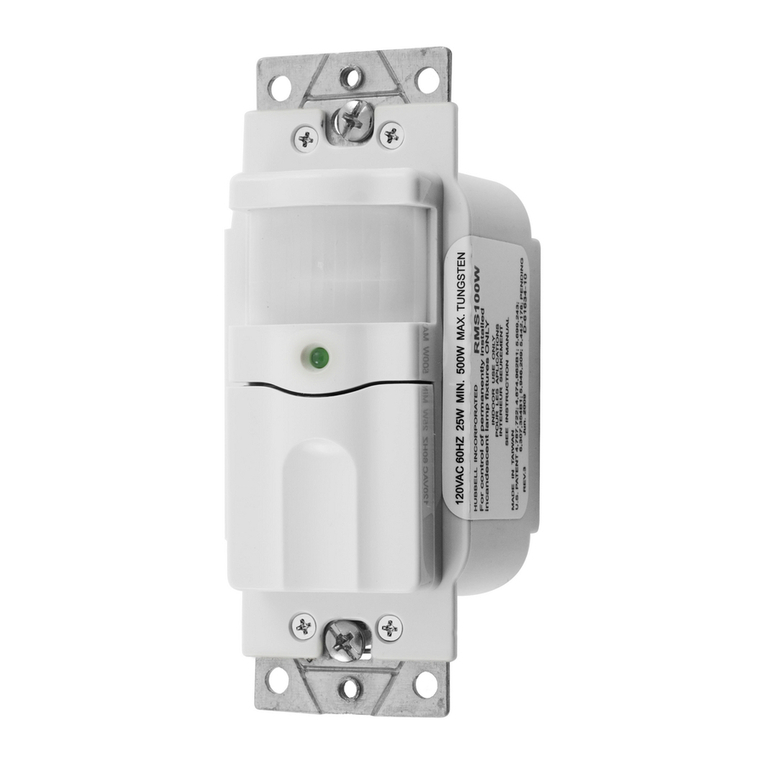
Hubbell homeSELECT RMS100 User manual

Hubbell

Hubbell homeSELECT RMS100 User manual

Hubbell Dual Lite CVEC15 User manual

Hubbell

Hubbell Dual Lite CVEC15 User manual

Popular Lighting Equipment manuals by other brands

Brizo 8SP-MU-4 manual

Brizo

Brizo 8SP-MU-4 manual

LUCE&LIGHT BROM 1.0 installation instructions

LUCE&LIGHT

LUCE&LIGHT BROM 1.0 installation instructions

IKEA BJÖRKSPIREA manual

IKEA

IKEA BJÖRKSPIREA manual

Laserworld Evolution Series ES-400RGB manual

Laserworld

Laserworld Evolution Series ES-400RGB manual

EuroLite LED B-40 user manual

EuroLite

EuroLite LED B-40 user manual

Qazqa Suplux SL 3 Black 103062 instruction manual

Qazqa

Qazqa Suplux SL 3 Black 103062 instruction manual

Commercial Electric 54568141 Use and care guide

Commercial Electric

Commercial Electric 54568141 Use and care guide

CREE LIGHTING 304 Series installation instructions

CREE LIGHTING

CREE LIGHTING 304 Series installation instructions

Goobay 49867 user manual

Goobay

Goobay 49867 user manual

ECOMAN ITALIA LED T8 instruction manual

ECOMAN ITALIA

ECOMAN ITALIA LED T8 instruction manual

Alkalite Krypton KT-81 user manual

Alkalite

Alkalite Krypton KT-81 user manual

Clas Ohlson GU10 manual

Clas Ohlson

Clas Ohlson GU10 manual

DTS DELTA 10 F user manual

DTS

DTS DELTA 10 F user manual

ring Solar Steplight manual

ring

ring Solar Steplight manual

One Stop Gardens 57696 Owner's manual & safety instructions

One Stop Gardens

One Stop Gardens 57696 Owner's manual & safety instructions

SIREM Swimeo A2 instructions

SIREM

SIREM Swimeo A2 instructions

Silvair MESH-CEDRP quick start guide

Silvair

Silvair MESH-CEDRP quick start guide

S&P PCRL80 manual

S&P

S&P PCRL80 manual

manuals.online logo
manuals.online logoBrands
  • About & Mission
  • Contact us
  • Privacy Policy
  • Terms and Conditions

Copyright 2025 Manuals.Online. All Rights Reserved.

WARNING – This product contains chemicals known to the State of California to cause cancer, birth defects and/or other reproductive
harm. Thoroughly wash hands after installing, handling, cleaning, or otherwise touching this product.
Emergency Lighting Equipment For Use in Damp Locations
Damp location listed units are suitable for installation in:
1. Interior locations subject to moderate degrees of moisture, such as some basements, some barns, some cold storage
warehouses, and the like.
2. Partially protected locations under canopies, marquees, roofed open porches and the like.
With Battery Pack Compartment Option
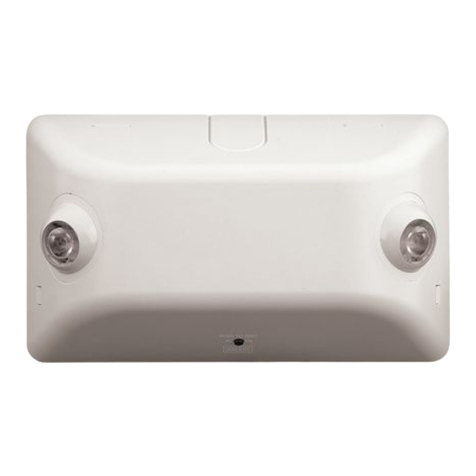
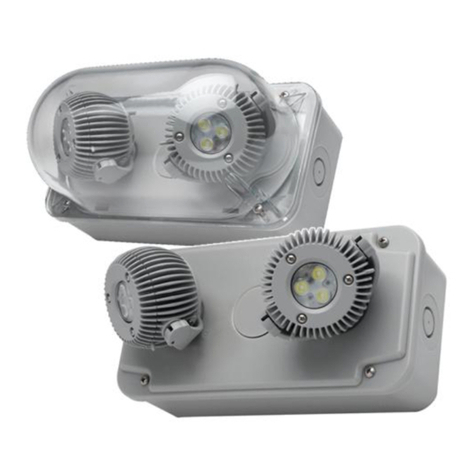
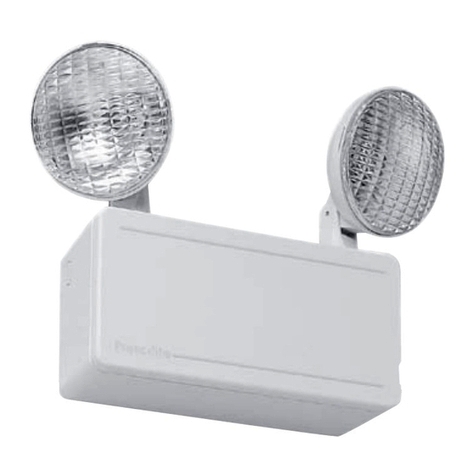
Twin-Head LED Emergency Lighting Unit
Spectron Equipped Models
Installation, Operation, and Service Instructions
EVHC-BC Series
IMPORTANT SAFEGUARDS
When using electrical equipment, basic safety precautions should
always be followed including the following.
READ AND FOLLOW ALL SAFETY
INSTRUCTIONS
1. Do not use outdoors.
2. Do not let power supply cords touch hot surfaces.
3. Do not mount near gas or electric heaters.
4. Equipment should be mounted in locations and at heights where it will not readily be subject
to tampering by unauthorized personnel.
5. The use of accessory equipment not authorized by the manufacturer may cause an
unsafe condition.
6. Do not use this equipment for other than its intended purpose.
7. Servicing of this equipment should be performed by qualied service personnel.
8. Test cycling: the Life Safety Code (NFPA 101) requires testing of emergency lighting units once a month for a
minimum of 30 seconds, and once a year for a minimum of 90 minutes.
INSTALLER:
•SEE UNIT LABEL FOR ADDITIONAL MODEL SPECIFICATIONS
•SAVE THESE INSTRUCTIONS FOR USE BY OWNER/OCCUPANT
RECYCLING INFORMATION
All steel, aluminum and thermoplastic parts are recyclable.
NOTICE: Emergency units contain rechargeable batteries which
must be recycled or disposed of properly.
Hubbell Lighting, Inc. Life Safety Products • www.dual-lite.com
Copyright© Hubbell Lighting, Inc., All Rights Reserved • Specications subject to change without notice. • Printed in U.S.A.
93059793_D
5/15
Service / Maintenance
93054591
93054591
93052054
Maintenance
This emergency lighting unit should be tested and maintained in accordance with National Electrical Code and NFPA 101 Life Safety
Code requirements. It is recommended that emergency light xtures be tested for 30 seconds once a month and for 90 minutes once
a year.
Taking A Unit Out of Service
If a unit is to be taken out of service for an extended period, the battery harness should be disconnected from the battery
compartment harness so that the battery will go into storage in a fully charged condition.
Replacing the Battery
1. De-engergize the AC power
2. Open Battery Compartment cover
3. Disconnect the battery harness from the battery compartment harness.
4. Disconnect the battery strap and remove battery pack.
5. Replace with a new battery (see unit model label or battery label for correct part number) and reconnect harness.
6. Snap cover closed (tighten security screw if applicable.)
Replacing LED Lamps
The LED lamps inside the unit are not replaceable or eld serviceable. Please see Dual-Lite.com for further assistance.
Troubleshooting
Emergency circuit does not work
• Batteries are shipped uncharged, please charge for 24 hours before testing.
• Make sure the switch pcb and the button/light pipe is correctly seated and aligned.
• Check wiring connections.
93054597
93054663
93054700
93051472
93054683
93050644
93051841
93055107
93054665
603635
Patents Pending
1
2
2
3
4
5
6
INSTALLATION INSTALLATION
The EVHC Spectron unit is equipped with intelligent wiring. Connect the black wire from the
unit to the hot building wire (120 or 277VAC) and the white wire to the building com wht wire.
1. Remove appropriate KO’s in backplate to mount
backplate to junction box.
2. Remove center KO from backplate and feed supply
leads through.
3. Secure back plate to junction box.
4. Connect wires from the unit to the building leads and
secure with wire nuts.
5. For remote EVHC models, cut the orange connector
from both remote leads and strip ends ½inch.
Observe proper polarity when connecting remote
leads to remote xtures. Pos. (+) to red remote xture
lead and Neg. (-) to black remote xture lead.
6. Installer should now become familiar with the eyeball
aimability and its limitations.
#6 Thread forming screw provided
This unit is designed to be mounted on a wall. Provide Spectron® self-testing/self-diagnostic units, with a single unswitched supply
from a 120 or 277 VAC branch circuit for normal lighting in the area to be protected.
1. Remove appropriate KO’s in back plate and mount
backplate to wall.
2. Afx conduit to backplate using correct hardware.
(Note: 3 mounting points)
3. Remove appropriate K.O.’s on housing.
4. Connect wires from the unit to the building leads and
Secure with wire nuts.
5. For remote EVHC models, cut the orange connector
from both remote leads and strip ends ½inch.
Observe proper polarity when connecting remote
leads to remote xtures. Pos. (+) to red remote xture
lead and Neg. (-) to black remote xture lead.
6. Installer should now become familiar with the eyeball
aimability and its limitations.
1. Align housing slots over tabs on backplate.
2. Pivot housing and snap closed.
3. Aim the lamps. Do not press on the lenses.
4. Connect battery pack harness to unit battery
compartment harness.
Wall Mount – Wiring
When opening battery compartment
cover, remove security screw
and pull open.
After mounting unit to wall.
Wall Mount – Conduit Wiring
Installing the Unit: Final Assembly
93054597
93054700
93055107
93051472
93054683 93054665
1
2
3
4
5
6
4
4
93052054
Initiating Action Test Cycle
Press test switch once 1 minute
Press test switch twice 90 minutes
Manual Tests
Using the unit test switch, users can initiate different
duration test cycles based on the following table:
Pressing the test switch any time after a 90 minute test
cycle has begun cancels the remainder of the 90 minute
test and returns the unit to normal operation.
Testing Period Duration of Test
Once a month 1 minute
Once every Alternating:
6 months 90 minutes or 60 minutes
Automatic Tests
The unit will automatically initiate a self-test/self-diagnostic
cycle based on the following table:
LED Status Indicator
A green/red LED is provided on the control panel
of all models equipped with the Spectron option.
Green Operating Status LED:
The green Operating Status LED serves as both an AC
power and self-test indicator. During normal operation,
the green Operating Status LED will be illuminated,
Indicating the presence of AC power. During all automatic
or manual self-test cycles, the green Operating
Status LED will blink twice every second.
Red Service Alert LED:
Under normal operating conditions, the red Service Alert
LED indicator will remain off. If the Spectron controller
detects a malfunction, the red Service Alert LED will blink
in the pattern listed on the label around the test button.
= LAMP FAULT
= LED DRIVER FAULT
= CHARGER FAULT
= BATTERY FAULT
= BATTERY DISCONNECTED
SERVICE ALERT CODES
ALTERNATING = LOAD LEARN IN PROGRESS
= LOAD LEARN FAILURE
***Once remote capacity models have been installed, press and hold the test button for
more than 5 seconds to initiate the “LOAD LEARN” process.***
“AC ON” LED is illuminated when AC power is present.
NOTE: All models are supplied with an AC Lockout circuit, which prevents the emergency lights from illuminating when the bat-
tery is connected and no AC power is present.
NOTE: All models are supplied with Low Voltage Disconnect circuit, which prevents damage to the battery from deep discharge
during prolonged emergency operation.
NOTE: Batteries are often shipped in a discharged state – this is normal. The battery will require charging. Allow 24 hours of
charging before testing the unit.
Models with Non-SPECTRON®Self-Diagnostic Circuitry.
Models equipped with Non-Spectron® self diagnostic electronics system provide:
• Visual indication of AC power status • Visual indication on self-diagnostic status and results.
Visual indication of any unit malfunctions include –
• Battery Disconnected • Charger Fault
Models with SPECTRON® Self-Testing/Self-Diagnostic Circuitry
Models equipped with the Spectron® self-testing/self-diagnostic electronics system provide:
• Visual indication of AC power status • Visual indication on self-diagnostic test status and results
Visual indication of any unit malfunctions include –
• Battery Disconnected • Battery Fault • Charger Fault • LED Driver Fault • Lamp Fault • Load Learn Failure
OPERATION
Spectron equipped units also include:
Browout protection: Unit will automatically transfer to emergency operation upon detection of low AC power
(approximately 80% of nominal line.)
Time Delay Retransfer: upon return of normal AC power, unit will remain in emergency mode for an additional 15 minutes
to allow AC power to stabilize.