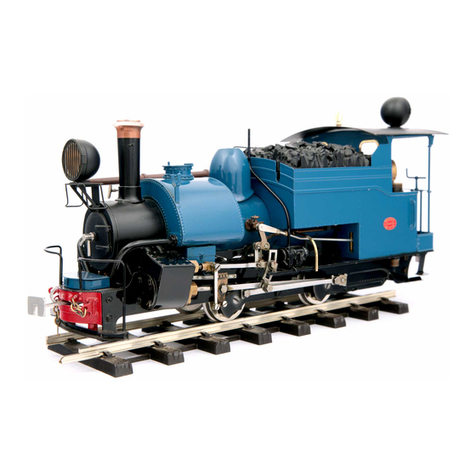
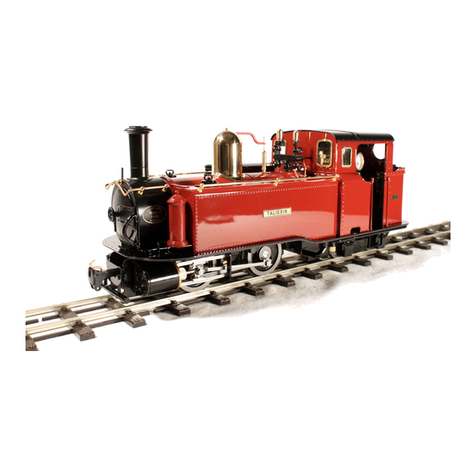
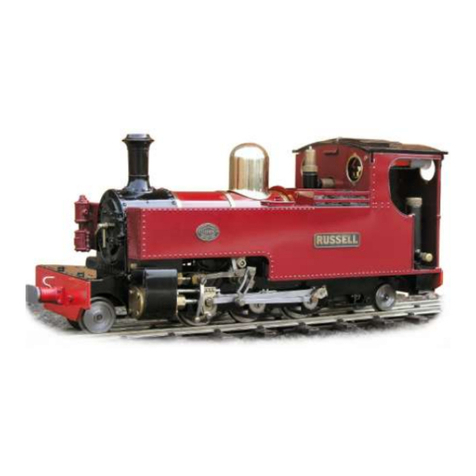
to allow access to the Gas Filler Valve. The coal load can be removed by
simply lifting it upwards.
The switch for the locomotive R/C equipment is on the rear of the front
bunker, just in front of the smoke box door..
The radio control equipment fitted to the locomotive is powered by 4 x
AAA batteries. The battery box is accessed by lifting off the top of the
front bunker.
PREPARING FOR OPERATION
The locomotive must be serviced before being operated. It is important to
perform all of the following operations.
NOTE, check that the batteries in both the R/C transmitter and the
locomotive are in good condition before attempting to operate the model -
see the Radio Control section later on.
1) FILLING THE GAS TANK
The filling of the gas tank should only be carried out in a well-ventilated
area, where there are no naked lights or other lighted locomotives close
by. Ordinary Butane or Iso-butane gas (as used in gas cigarette lighters)
is the preferred fuel, though for economy, the larger canisters as used for
blowlamps or camping stoves etc. are better. The larger canisters have
an EN417 threaded self sealing valve on top and require a special
adapter to couple up to the filler valve on the locomotive. A Gas Filler
Adapter is obtainable from your local garden railway supplier or direct
from ROUNDHOUSE. Mixed gasses are also available and may be used
if ordinary butane or iso-butane are not available, but see the ‘Gas
System’ section for more information on this subject.
Before attempting to fill the gas tank, make sure that the gas control valve
is closed by turning it clockwise and that there are no other operating
locomotives or naked flames nearby.
The filler valve for the gas tank is in the rear bunker and is accessed
through a hole in the dummy coal load. Ensure that the gas canister is
fitted with a correct adapter, then invert it and place its nozzle over the
gas filler valve. Support the locomotive from underneath in the area of the
tank, and press the canister down. The gas will be heard hissing as it
enters the tank and a small amount will escape around the valve. This is
quite normal and is the tank venting as the liquid enters. After about 30
seconds liquid gas will emerge from the valve showing that the tank is
7