troubleshooting. For the first couple of minutes keep the burner on
low. This is important, as until it warms up, the flame will be a little
unstable and turning it up too much could cause it to go out. Also,
with a completely full tank, liquid gas could be drawn off instead of
vaporised gas, which can also extinguish the flame. After a couple
of minutes, the gas control valve can be opened more to speed up
steam raising. Open the gas regulator slowly to about one full turn.
The full range of adjustment (closed to fully open) is achieved
within the first full rotation of the gas regulator knob any more is
unnecessary. .
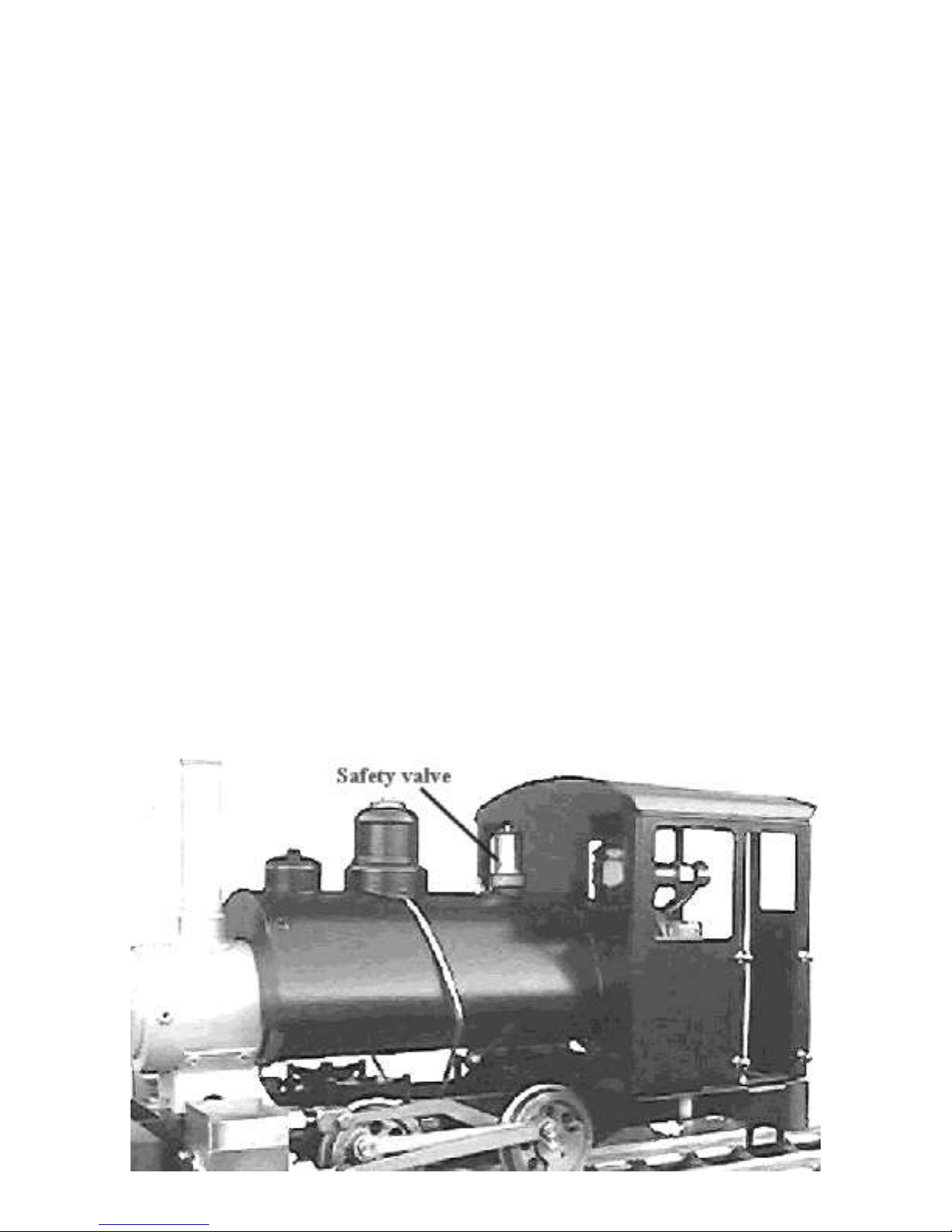
When full working pressure has been reached (about 40psi), the
safety valve will start to blow off steam, this can take up to 10 or 12
minutes in outdoor locations. Steam generation can be controlled
by the gas valve in the cab. If the safety valve blows off frequently
during running, then too much steam is being produced, which
wastes water and gas. Turning down the burner will decrease the
amount of steam made. Conversely, if steam pressure is not
maintained during a run, then the burner should be turned up. The
art of balancing steam generation to the operational requirement by
the adjustment of the gas control valve will quickly be learned. The
gas tank has a duration of about 25 minutes, though this will vary a
little depending on the gas valve setting.
DRIVING THE LOCOMOTIVE
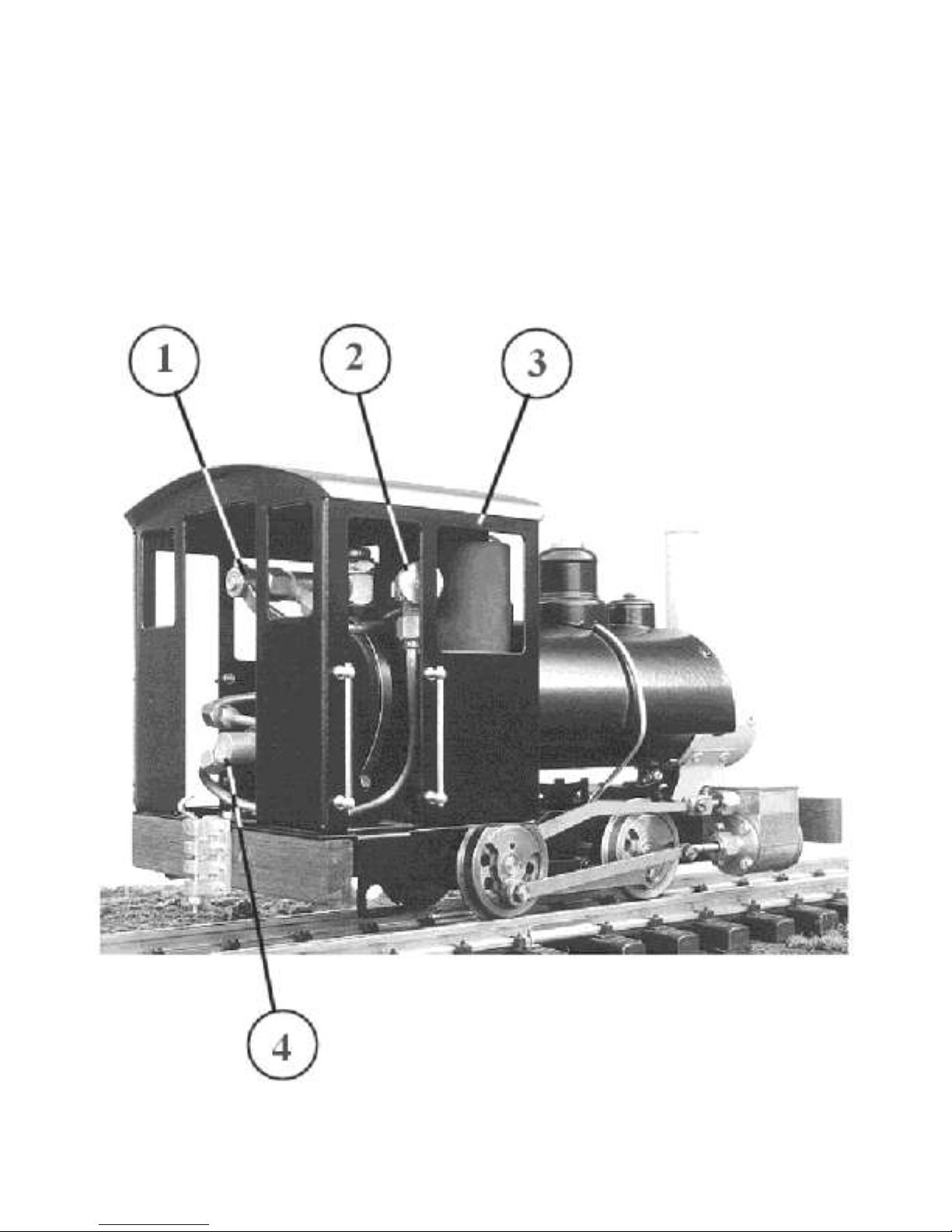
There are two main controls, both of which are housed in the cab.
1) The gas regulator, which should be used to control steam
generation as described earlier.
2) The steam regulator. This is the main steam control valve and
regulates the speed at which the engine will run. The regulator
handle is situated in the right hand cab doorway and is moved anti-
clockwise to open and clockwise to close.
Select the desired direction of travel by manually moving the
locomotive for one wheel revolution in the desired direction and
crack open the regulator just a little. Initially, there will be a certain
10