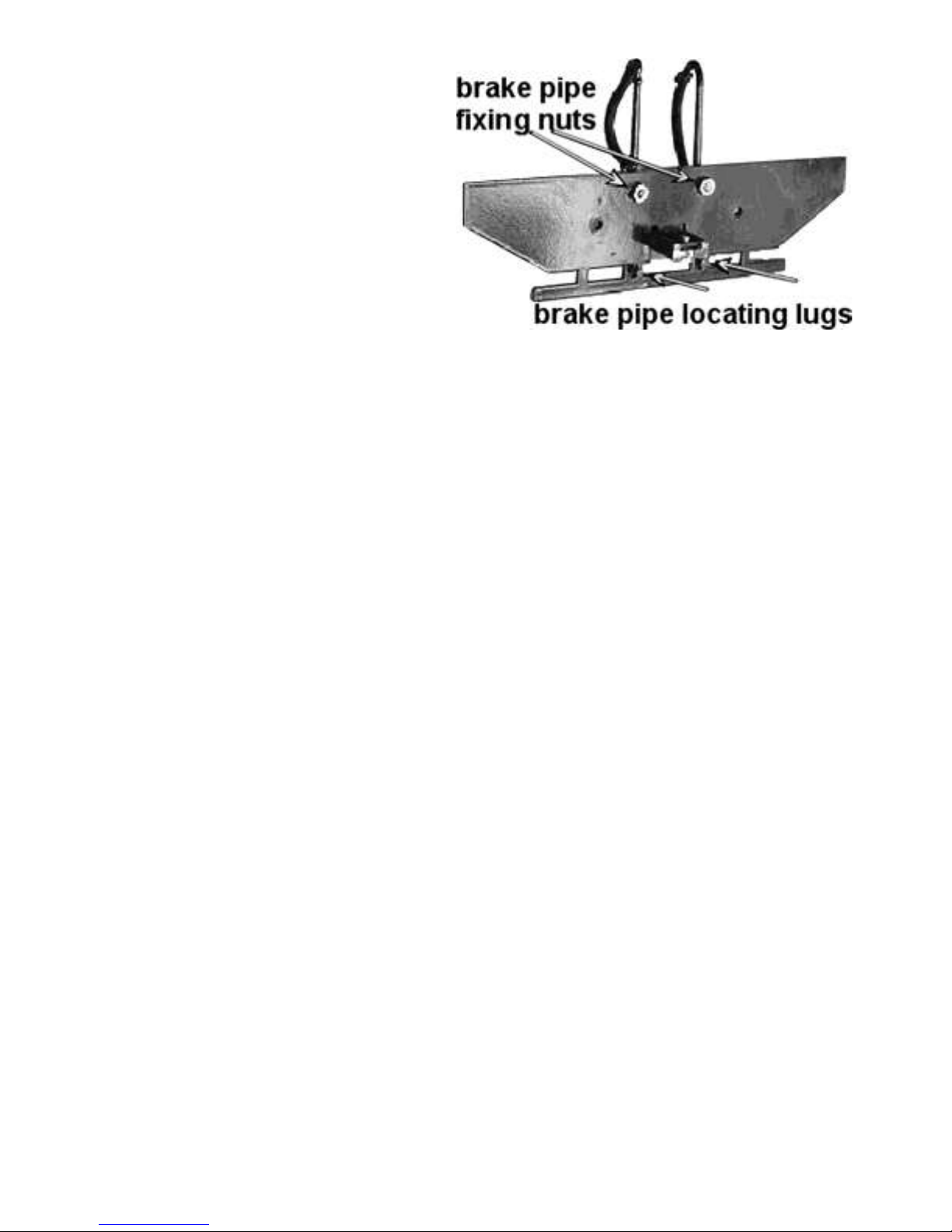
4) A set of dummy brake pipes
are supplied and you will need
to decide which, if any, you
would like to fit. The fitment of
them to the prototype
locomotives varied over the
years and if you require your
model to represent a particular
locomotive or era, check which
pipes it carried. There are two
straight pipes and two with curved feed pipes. The curved ones go
on the left of the centre buffer and the straight ones on the right.
To fit them, you will need to remove the front and rear buffer
beams. These comprise of a steel buffer beam with etched brass
overlay and are fastened to the chassis by a pair of brass cheese
head screws and nuts. The brake pipes are lost wax brass castings
and are already painted red for you, but will require the hoses and,
for some versions, the upstand pipe, painting black. To fasten them
to the buffer beams, the lug at the bottom fits into a hole in the
bottom of the buffer beam and the threaded stud fits through the
hole with a nut on the inside. Once the brake pipes are fitted,
carefully replace the buffer beams with the original fixing screws.
5)The dummy fire irons and shovels can be painted as required
and were normally kept on the tank tops, just in front of the coal
bunkers. They can be glued in place if required and the use of an
epoxy adhesive such as ‘Devcon’ is recommended.
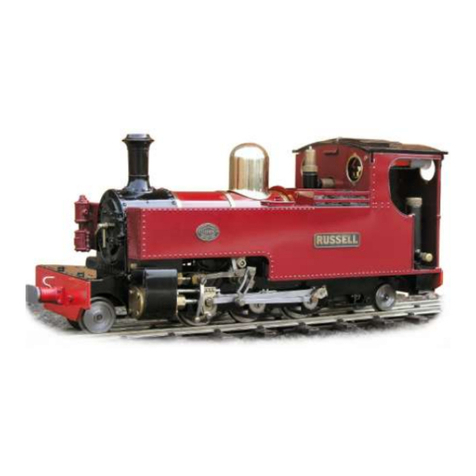
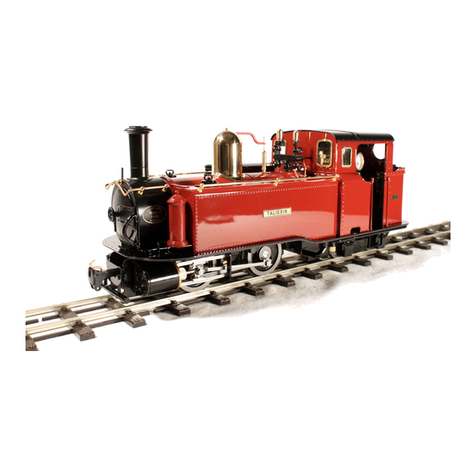
6) A set of etched brass name and number plates are supplied, and
these should be painted before fitting. The paint should be applied
to the background and left to dry fully. Once dry, snip the required
plates from the etch with a pair of sharp tin snips, and clean up the
edges with a fine file or wet and dry paper. Finally, lay a sheet of
fine wet and dry paper on a flat surface and lightly rub the front
face of the plate onto it. This will remove any traces of paint from
the raised lettering and edges. The shed code and smoke box
number plates, both of which fit on the smoke box door, have the
raised letter and numbers, painted white.
For fixing the plates to the locomotive, we recommend a light
5
5