manuals.online logo
Brands
  1. Home
  2. •
  3. Brands
  4. •
  5. Skymsen
  6. •
  7. Kitchen Appliance
  8. •
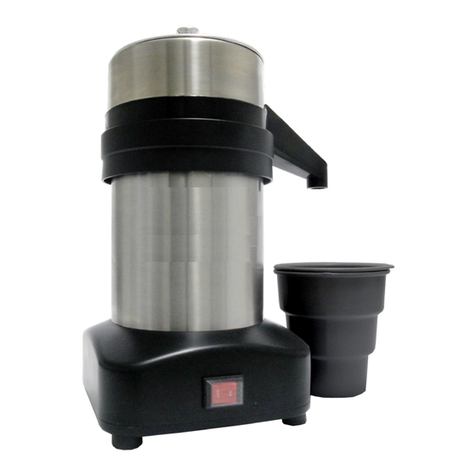
  9. Skymsen ESB-N User manual

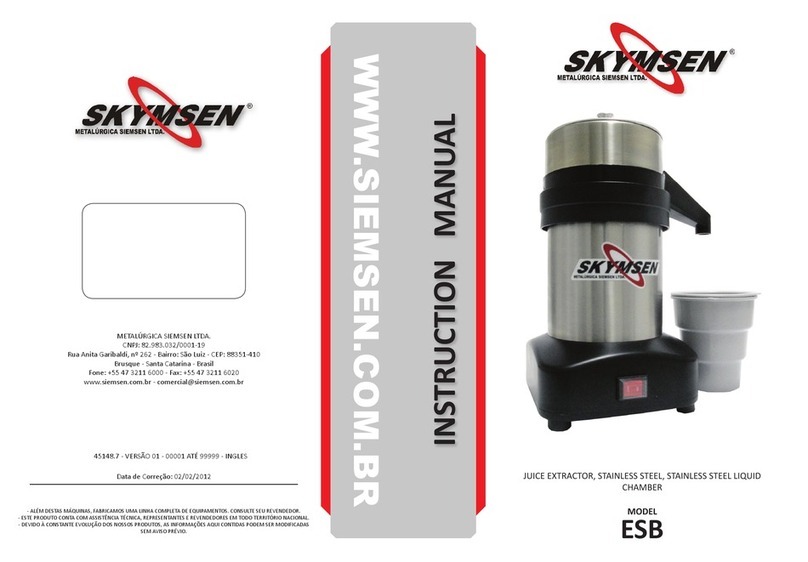
Skymsen ESB-N User manual

Other Skymsen Kitchen Appliance manuals

Skymsen ESB User manual

Skymsen

Skymsen ESB User manual

Skymsen DAL-06S User manual

Skymsen

Skymsen DAL-06S User manual

Skymsen ABSL User manual

Skymsen

Skymsen ABSL User manual

Skymsen CLM-300 User manual

Skymsen

Skymsen CLM-300 User manual

Skymsen HS-98 User manual

Skymsen

Skymsen HS-98 User manual

Skymsen ESB-N User manual

Skymsen

Skymsen ESB-N User manual

Skymsen JB35 User manual

Skymsen

Skymsen JB35 User manual

Skymsen DAL-06S User manual

Skymsen

Skymsen DAL-06S User manual

Skymsen ABS-HD User manual

Skymsen

Skymsen ABS-HD User manual

Skymsen EX User manual

Skymsen

Skymsen EX User manual

Skymsen DC-08 User manual

Skymsen

Skymsen DC-08 User manual

Skymsen ES-100 User manual

Skymsen

Skymsen ES-100 User manual

Skymsen FC-350 User manual

Skymsen

Skymsen FC-350 User manual

Skymsen EX User manual

Skymsen

Skymsen EX User manual

Skymsen Fleetwood BPS-06 User manual

Skymsen

Skymsen Fleetwood BPS-06 User manual

Skymsen PS-22 User manual

Skymsen

Skymsen PS-22 User manual

Skymsen ESB-SUPER User manual

Skymsen

Skymsen ESB-SUPER User manual

Skymsen DC-06 User manual

Skymsen

Skymsen DC-06 User manual

Skymsen ESB User manual

Skymsen

Skymsen ESB User manual

Skymsen RQ-150 User manual

Skymsen

Skymsen RQ-150 User manual

Skymsen Fleetwood FAT-120 User manual

Skymsen

Skymsen Fleetwood FAT-120 User manual

Skymsen PS-22 User manual

Skymsen

Skymsen PS-22 User manual

Skymsen EXI User manual

Skymsen

Skymsen EXI User manual

Skymsen ESB-N User manual

Skymsen

Skymsen ESB-N User manual

Popular Kitchen Appliance manuals by other brands

Saturn ST-EK8037 manual

Saturn

Saturn ST-EK8037 manual

BOSKA Pro 853560 instruction manual

BOSKA

BOSKA Pro 853560 instruction manual

Enders 7909 instruction manual

Enders

Enders 7909 instruction manual

Kalorik USK PPG 37241 operating instructions

Kalorik

Kalorik USK PPG 37241 operating instructions

Scarlett SC-FD421001 instruction manual

Scarlett

Scarlett SC-FD421001 instruction manual

FoodSaver V4925 owner's manual

FoodSaver

FoodSaver V4925 owner's manual

Course	Housewares B416144 quick start guide

Course Housewares

Course Housewares B416144 quick start guide

AEG SANTO Series operating instructions

AEG

AEG SANTO Series operating instructions

Melissa 643-036 instruction manual

Melissa

Melissa 643-036 instruction manual

cecotec ROCK'NTOAST 3IN1 instruction manual

cecotec

cecotec ROCK'NTOAST 3IN1 instruction manual

Gourmia GMF225 instructions

Gourmia

Gourmia GMF225 instructions

Electrolux EKM7 Series Instruction book

Electrolux

Electrolux EKM7 Series Instruction book

Magio MG-965 instruction manual

Magio

Magio MG-965 instruction manual

Keimling Naturkost Excalibur 56301WH Operation manual

Keimling Naturkost

Keimling Naturkost Excalibur 56301WH Operation manual

Beper 90.071 use instructions

Beper

Beper 90.071 use instructions

Geryon E2900-M user manual

Geryon

Geryon E2900-M user manual

Morphy Richards 46718 owner's manual

Morphy Richards

Morphy Richards 46718 owner's manual

Kenwood A995 manual

Kenwood

Kenwood A995 manual

manuals.online logo
manuals.online logoBrands
  • About & Mission
  • Contact us
  • Privacy Policy
  • Terms and Conditions

Copyright 2025 Manuals.Online. All Rights Reserved.

JUICE EXTRACTOR / EXTRACTOR DE JUCOS
MODEL / MODELO
ESB-N
METALÚRGICA SKYMSEN LTDA.
Rodovia Ivo Silveira, nº 9525 - Volta Grande
88355-202 - Brusque - Santa Catarina
Fone: +55 47 3211 6000 - Fax: +55 47 3211 6020
www.skymsen.com - comercial@skymsen.com
65478.7 - ENGLISH/ESPAÑOL
Data de Revisão: 01/12/2020
THE INFORMATIONS CONTAINED IN THE PRESENT INSTRUCTION MANUAL MAY BE MODIFIED WITHOUT PREVIOUS NOTICE.
SUMMARY (ENGLISH)
1. INTRODUCTION ..........................................................................................................................................................3
1.1 Safety .......................................................................................................................................................................3
2 INSTALLATION AND PRE OPERATION............................................................................................................................3
2.1 Placement of the equipment.....................................................................................................................................3
2.2 Electrical Installaon.................................................................................................................................................3
3. COMPONENTS AND TECHNICAL FEATURES..................................................................................................................3
4. OPERATIONAL PROCEDURES.......................................................................................................................................3
5. CLEANING...................................................................................................................................................................4
6. MAINTENANCE ...........................................................................................................................................................4
7. OBSERVED NORMS .....................................................................................................................................................4
SUMÁRIO (ESPAÑOL)
1. INTRODUCCIÓN ..........................................................................................................................................................5
1.1 Seguridad .................................................................................................................................................................5
2 INSTALACIÓN Y PRE OPERACIÓN..................................................................................................................................5
2.1 Posicionamiento .......................................................................................................................................................5
2.2 Instalación Eléctrica ..................................................................................................................................................5
3. COMPONENTES Y CARACTERÍSTICAS TÉCNICAS...........................................................................................................5
4. PROCEDIMIENTOS DE USO..........................................................................................................................................5
5. LIMPIEZA ....................................................................................................................................................................6
6. MANTENIMIENTO.......................................................................................................................................................6
7. NORMAS OBSERVADAS...............................................................................................................................................6
• Conecte el equipo a la red eléctrica.
• El accionamiento de la maquina es hecho a través de la
Llave Prende/Apaga/Pulsar Nº 06 ubicada en la Base.
• Los Exprimidores de Cítricos son maquinas que
trabajan en alta velocidad.
• Primeramente corte la naranja o limón en la mitad.
• Con la maquina prendida, agarre una de las mitades y
presione la misma sobre la Corona Nº 09 o Nº 10 que
está encajada en el eje del motor, y automácamente
el jugo de la fruta escurrirá para dentro del Vaso Nº 08
a través del Cedazo Nº 07.
5. LIMPIEZA
El Equipo necesita ser totalmente limpio cuando:
-Antes de ulizer por la primera vez;
-Después de la operación diária;
-Siempre que no ulizado por un periodo largo;
Algunas partes pueden ser removidas para limpieza:
-Tapa
-Camara de Jugo
-Coronas
Rere la tapa N° 01, la castaña Grande N° 09 y la castaña
pequeña N° 10 y posteriormente la cámara de jugos N° 02.
Limpie todas las partes con agua e jabon neutron.
Para montar las partes anteriormente removidas, proceda
de manera inversa la secuencia de los ítems citados arriba.
6. MANTENIMIENTO
El mantenimiento debe ser considerado como un conjunto
de procedimientos con el objevo de conservar el equipo en
las mejores condiciones de funcionamiento propiciando
un aumento de su vida úl y de su seguridad.
* L
         
deterioración y todos los terminales
cuanto a su aprieto y corrosión.
* Contactos – Llave prender/apagar, botón de emergencia,
botón rearme, circuitos
        
componentes estén funcionando
correctamente y que la operación del equipo sea normal.
         
acuerdo con el ítem 3.2 de este manual.
1
- V
- Controlar la tensión de la toma eléctrica
- Medir la corriente eléctrica y compararla con la corriente
nominal

evitar malos contactos.

- Controlar el cableado eléctrico para iden
sobrecalentamiento, aislamiento

2.
-Ve
apagar el botón de emergencia,
botón rearme, y circuitos electrónicos con respecto a
sobrecalentamiento, aislamiento



sistemas de vedamiento.
7. NORMAS OBSERVADAS
ABNT NBR NM 60335-1
IEC 60335-2-14
8. DIAGRAMA ELÉCTRICO
Pase el lector de QR Code para obtener
informaciones sobre cuidados con los
aceros inoxidables.
Pase el lector de QR Code para obtener
informaciones sobre seguridad y
mantenimiento.
PRENDE/
APAGA
1. INTRODUCTION
This equipment is intended for use in domesc applicaons
and similar, such as:
-
work environments;
- Farm houses;
- By customers in hotels, motels and other types of
environments housing.
1.1 Safety
Read the following instrucons in order to avoid accidents:
1.1.1 Never operate this equipment with: wet clothes or
shoes, resng on wet surfaces, nor plunge it in water or
any other liquid, and do not throw water directly on the
equipment.
1.1.2 If your equipment is failing or has been dropped or
damaged any way, take it to Technical Assistance to repair,
or for electric or mechanical adjustment.
1.1.3 Using accessories not recommended by the
manufacturer, may cause personal injuries.
1.1.4 When the equipment is turned on, keep hands and
any tools away from its moving parts. This will prevent from
physical injuries and damages to the machine.
1.1.5 During operaon, never use clothes with wide sleeves,
specially at the wrist.
1.1.6 Be sure the equipment voltage is the same as the
network electric voltage. Provide a correct grounding in
accordance to your local safety standarts.
1.1.7 Do not operate any equipment having a damaged
cord or plug. The cord shall not rest on hot surfaces nor on
table edges.
1.1.8 Before to switch ON the extractor check if the crown
          ed on
their posions.
This equipment must not be used by individuals
with reduced physical, sensorial or mental capabilies
nor children. Individuals without propper training and
experience must not operate this equipment unless they
receive propper training and instrucons or are operang
it under the supervision of a person who is responsible for
their safety.
Unplug the equipment from electric source when: it
is not being used, before cleaning or before to insert or
remove accessories, and when any maintenance or service
is to be done.
If any emergency shall arise the plug must be
disconnected from the electrical grid.
This equipment can be used connuously as long
as the limits of the machine are respected, that is, the
extracon of the orange juice must be done in a gentle
way, compressing the orange against the crown without
forcing the motor to stop.
2. INSTALLATION AND PRE-OPERATION
2.1 Placing
The equipment must be placed on to a levelled stable
surface approximately 850 mm high.
2.2 Electrical Installaon
The equipment has been designed to operate 110 V. When
you receive the equipment check the voltage indicated on
the cord label
T           
the last one is the ground . All the 3 (three) pins must be
properly connected.
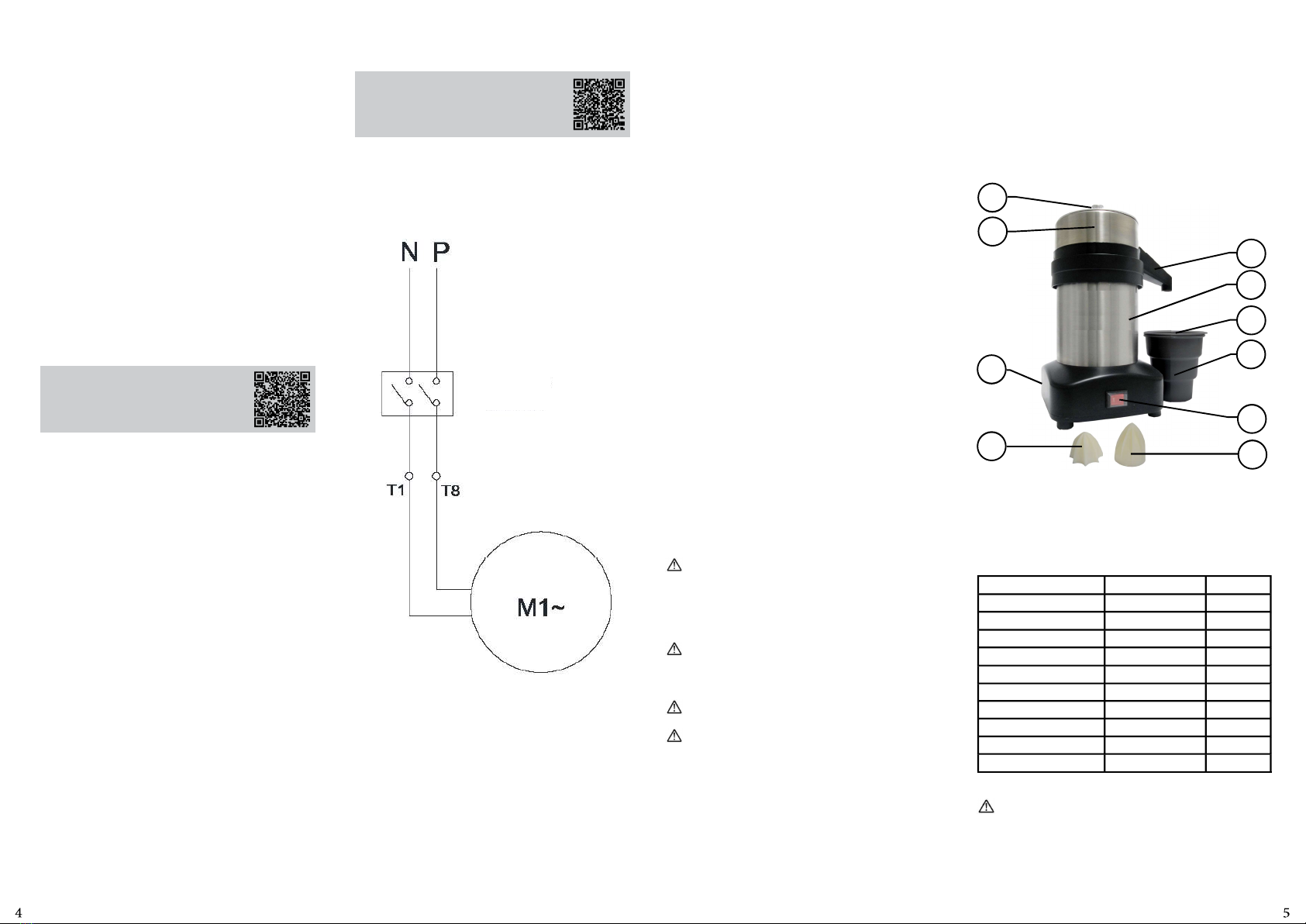
3. COMPONENTS AND TECHNICAL CHARACTERISTICS
4. Operaon Procedures
Always wait unl the motor complete stop before
changing the crown.
• Make sure the equipment is stable on the working
ed.
• Before to use the equipment all the parts to be in
contact with the product shall be washed with water
and neutral soap.
• To start the operaon, turn on the ON/OFF Switch #
05 (Pic-1), located on the Base # 06 (Pic-01).
• Juice Extractors work with high speed.
• First, cut the oranges or the lemons in two halves.
01
02
06
03
04
05
01 – Lid
02 – Juice Chamber
03 – Motor Support Flange
04 – Motor Housing
05 – ON/OFF Switch
06 – Base
07 – Sieve
08 – Cup
09 – Large Crown
10 – Small Crown
CHARACTERISTICS UNIT ESB-N
Average Producon Oranges/minute 15
Voltage V 110 / 220
Frequency Hz 60
Power Rang W 180
Consumpon kW/h 0,18
Heigth mm 440
Length mm 360
Depth mm 270
Net Weight kg 5,4
Shipping Weight kg 6,5
07
08
09 10

• Turn the machine on, hold half of the fruit and press it

           
through the sieve # 07 (Pic-01).
5. CLEANING
The equipment shall be totally cleaned and sanized:
- me
- Aon
-When it has not been used during a long me
- Before to operate it aer a long period unused
Some parts of the equipment may be removed for cleaning,
such as:
- Lid
- Juice Chamber
- Crowns
Remove the Lid # 01 (Pic. 01 ), the Large Crown # 09 or the
Small Crown # 10 (Pic. 01) and aer the Juice Chamber # 02
(Pic. 01).
Wash all the parts with water and neutral soap.
To assemble follow the inverse path.
6. MAINTENANCE
Maintenance must be considered a set of procedures
with the purpose to keep the equipment best operang
condions, therefore increasing the equipment life and
safety.
* Cleaning – check item 5. CLEANING
*Wiring - Check all wires regarding deteriorate condions as
well as all electric contacts (terminals) regarding ghtening
and corrosion .
*Contacts – ON/OFF switches, emergency buon, reset
buon , electronic circuits etc , check the equipment in order
to assure that all components are correctly working and the
equipment operaon is normal .
* Installaon – make sure the installaon followed item 2
instrucons.
1 - Each month check :
- Check the electrical installaon
- Measure the voltage at the socket
- Measure the working current and match it with the nominal
current
- Check the ghtening of all electric terminals to avoid bad
contacts
- Check electric motor shaclearance
- Check the wiring for overeang , insulaon failures and
mechanical damages .
2 - Each three month checks
- Check electrical components such as ON/OFF switch,
emergency buon , reset buon, electronic electric circuits,
overeang, insulaon failings, or mechanical damages
- Check bearings clearances

7. APPLICABLE NORMS
Brazilian Norm ABNT NBR NM 60335-1
IEC Norm 60335-2-64
8. ELECTRIC DIAGRAM
Use Your QR Code Reader to access more
informaon regarding the cares needed
when handling stainless Steel.
Use Your QR Code Reader to access
more informaon regarding safety and
maintenance.
ON/OFF
SWITCH
1. INTRODUCCIÓN
Este equipamiento fue proyectado para ser usado en
aplicaciones de uso domésco o similares que aclaramos:
       endas o ambientes
similares;

- Espacios de cocinas en la reparciones publicas o privadas.
- En espacio gourmet en condominios y viviendas.
1.1 Seguridad
Para evitar cualquier accidente siga las siguientes
instrucciones:
1.1.1 Nunca la use con ropas ó pies mojados y/ó en
          
cualquier otro liquido y no use chorro de agua directamente
contra el equipo.
1.1.2
de alguna manera ó no funcione llévelo hasta una Asistencia
Técnica para revisión y reparo.
1.1.3 Usar accesorios no recomendados por el fabricante
puede proporcionar lesiones corporales.
1.1.4 Mantenga las manos ó cualquier otro objeto lejos de
todas las partes en movimiento mientras el equipo estuviera
funcionando para evitar lesiones corporales y/ó daños al
equipo.
1.1.5 Nunca use ropas con mangas anchas, principalmente
cerca de los puños, durante la operación.
1.1.6 Be sure the equipment voltage is the same as the
network electric voltage. Provide a correct grounding in
accordance to your local safety standarts.
1.1.7 No use el equipo cuando tenga el cable o el enchufe


1.1.8 Antes de prender la maquina cerquese que la
Corona Grande Nº 09 ó la Corona Pequena Nº 10 y la Cámara

Este equipamiento não se desna a la ulización
por personas (inclusive niños) con capacidad sicas,
sensoriales o mentales reducidas, o por persona con
falta de experiencia y concoimiento, salvo si hubiera
recibido la capacitación adecuada o esté bajo la supervision
del encargado por su seguridad.
Desconecte el equipamento de la red eléctrica quando:
no esté en uso, antes de limpiarlo, al sacar o colocar
accesorios, antes del servicio de mantenimiento o antes de
cualquier po de serviçio.
En caso de emergencia rere el enchufe de la toma de
energia eléctrica.
Este equipo se puede ulizar de forma connua siempre
que se respeten los límites de la máquina, es decir, la
extracción del jugo de naranja se debe realizar de manera
suave, comprimiendo la naranja contra la corona sin forzar
el motor a detenerse.
2. INSTALACIÓN Y PRÉ OPERACIÓN
2.1 Posicionamiento
Su equipamiento deberá estar posicionado y nivelado arriba

de altura.
2.2 Instalación Eléctrica
Este equipo fue desarrollado para 110 Volts, al recibirlo
queta existente en el
cable eléctrico.
El enchufe del cable eléctrico posee tres pernos, dos planos
y uno redondo (perno de erra). Es obligatorio que los tres
puntos estén debidamente conectados, antes de prender el
equipo.
3. COMPONENTES Y CARACTERÍSTICAS TÉCNICAS
4. PROCEDIMENTOS PARA OPERACIÓN
Siempre que desear cambiar las Coronas espere por la
completa parada del motor para hacerlo.
• Antes de prender la maquina esté seguro que la Corona
está debidamente encajada.
• Antes de ulizer el equipo, limpie todas las partes con
agua e jabon neutron.
01
02
06
03
04
05
01 – Tapa
02 – Camara de Jugos
03 – Flange del Suporte del
Motor
04 – Gabinete
05 – Llave ON/OFF
06 – Base
07 – Cedazo
08 – Vaso
09 – Corona Grande
10 – Corona Pequena
07
08
09 10
CARACTERÍSTICAS UNID ESB-N
Produccion Media Naranja/min 15
Voltage V 110 / 220

Frecuencia Hz 60
Potencia W 180
Consumo kW/h 0,18
Altura mm 440
Largo mm 360
Profundidad mm 270
Peso Neto kg 5,4
Peso Bruto kg 6,5