6
4. LEGEND
5. SAFETY PRECAUTIONS
• The warning triangle labels all instructions relevant for safety. Always comply with these, as non-observance may
lead to injuries or damage the device.
• Only connect the device to a power socket installed according to regulations.The voltage has to correspond with the
information on the type plate of the device.
• Do not pinch the mains cable and protect it from sharp edges, humidity, heat or oil.The mains cable cannot be repla-
ced.The device has to be scrapped if the cable is damaged.
• Do not operate the device or pull the mains plug immediately if the cable is damaged or in the event of a suspected
defect. In these cases, please contact our technicians.
• Pull the mains plug when the device is not being operated.
• Keep the packaging material, particularly lms and lm bags out of reach of children. Risk of suocation.
• Remove all protective lms from the device prior to start-up.
• Place the mains cable in such a manner that it does not impede and that it cannot be unplugged accidentally.
• Disconnect the battery charger from the power supply after the charging process.
• Store the charger in a place which is out of the reach of children and unauthorised persons.
• Do not operate the device close to combustible material or in an explosive environment.
• Always wear suitable work clothing, protective gloves and safety glasses. Battery acid is caustic! Immediately rinse
any acid splashes with lots of water and consult a physician, if required. If battery acid has come in contact with eyes,
rinse immediately under running water for at least 10 minutes and consult a physician.
• Do not cover the charger as this may lead to overheating and thus damage to the device. During operation, do not
place the charger on an insulating surface (e.g. polystyrene) - risk of heat accumulation!
• If you would like to charge a motor vehicle battery in an in-situ position, rst park the vehicle securely, then pull
the parking break and switch o the engine. Disconnect the battery from the electrical distribution system of your
vehicle. For this purpose, read the manual of your vehicle or ask your specialist workshop.
• Only hold the power cable at the power plug when disconnecting from the power socket.
• Do not expose the charger to re, heat and long-temperature impact of more than +40°C!
• Keep these operating instructions and pass them on to other users.
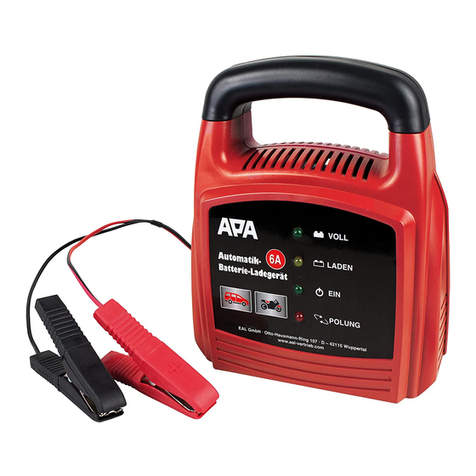
6.2 CONNECTING OF BATTERY CHARGER
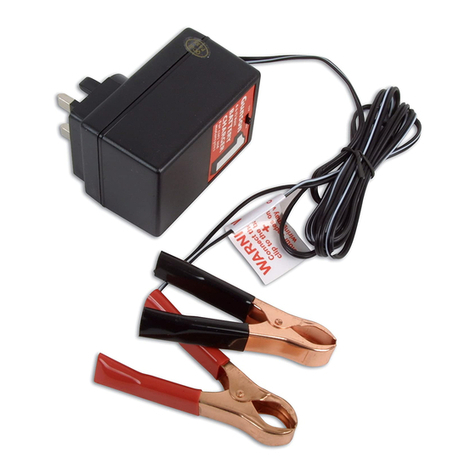
Attention: Ensure that the charger is not connected to the power socket. Principally connect the red positive cable (+)
of the charger to the positive pole of the battery rst. Subsequently, connect the black minus cable (-) to the negative
pole of the battery. If you charge the battery in situ, connect the black negative cable (-) to the car body, far away from
the battery, the carburettor and fuel lines. Always maintain this sequence.
6. OPERATING INSTRUCTIONS
6.1 PREPARATION OF THE BATTERY
Clean the battery poles from dust and corrosion residue. Only for open batteries: replenish distilled water up to the minimum ll level.
Leave the cells of the battery open until the end of the charging process. In case of maintenance-free batteries, please follow the
instructions of the battery manufacturer to the letter.
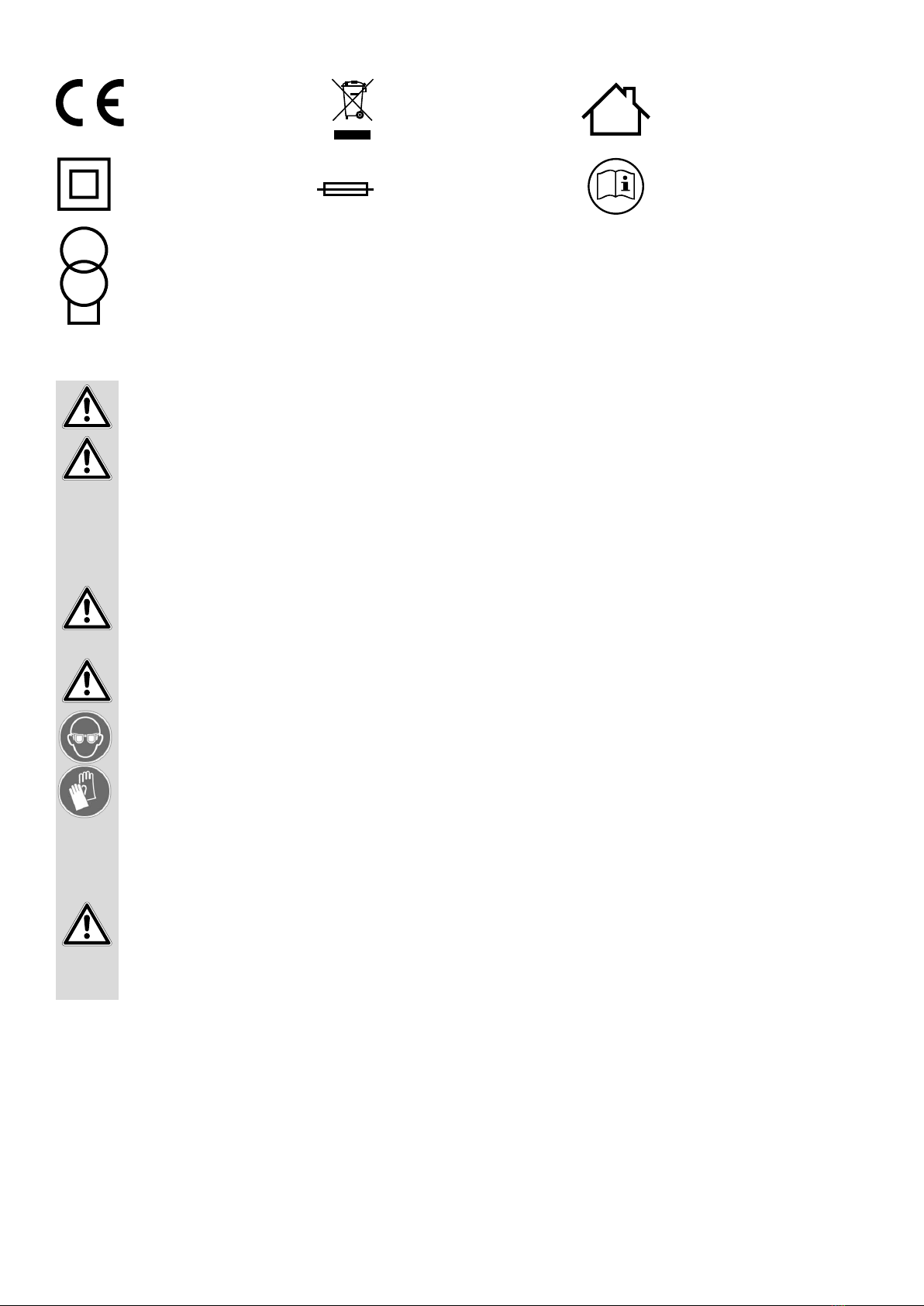
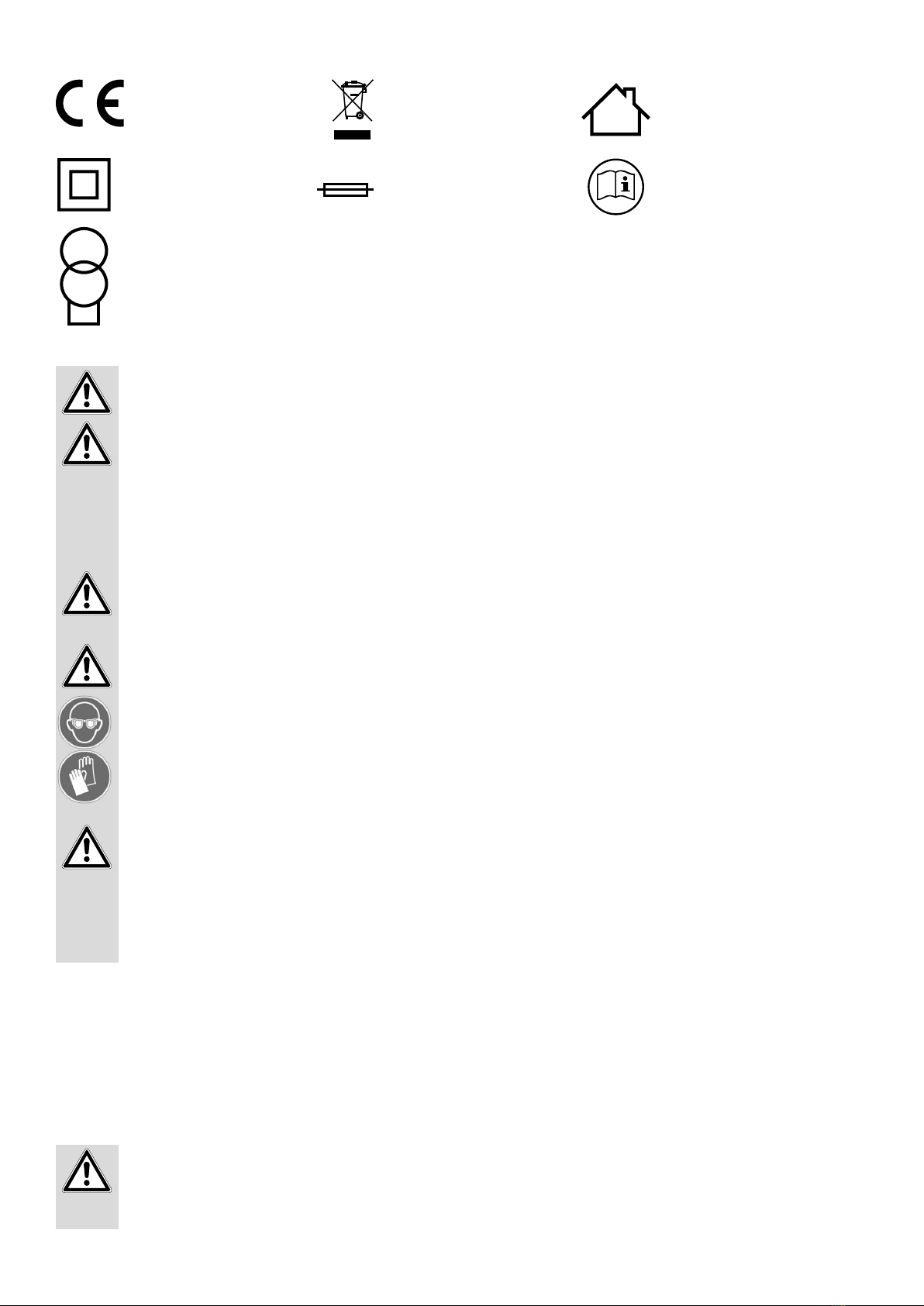
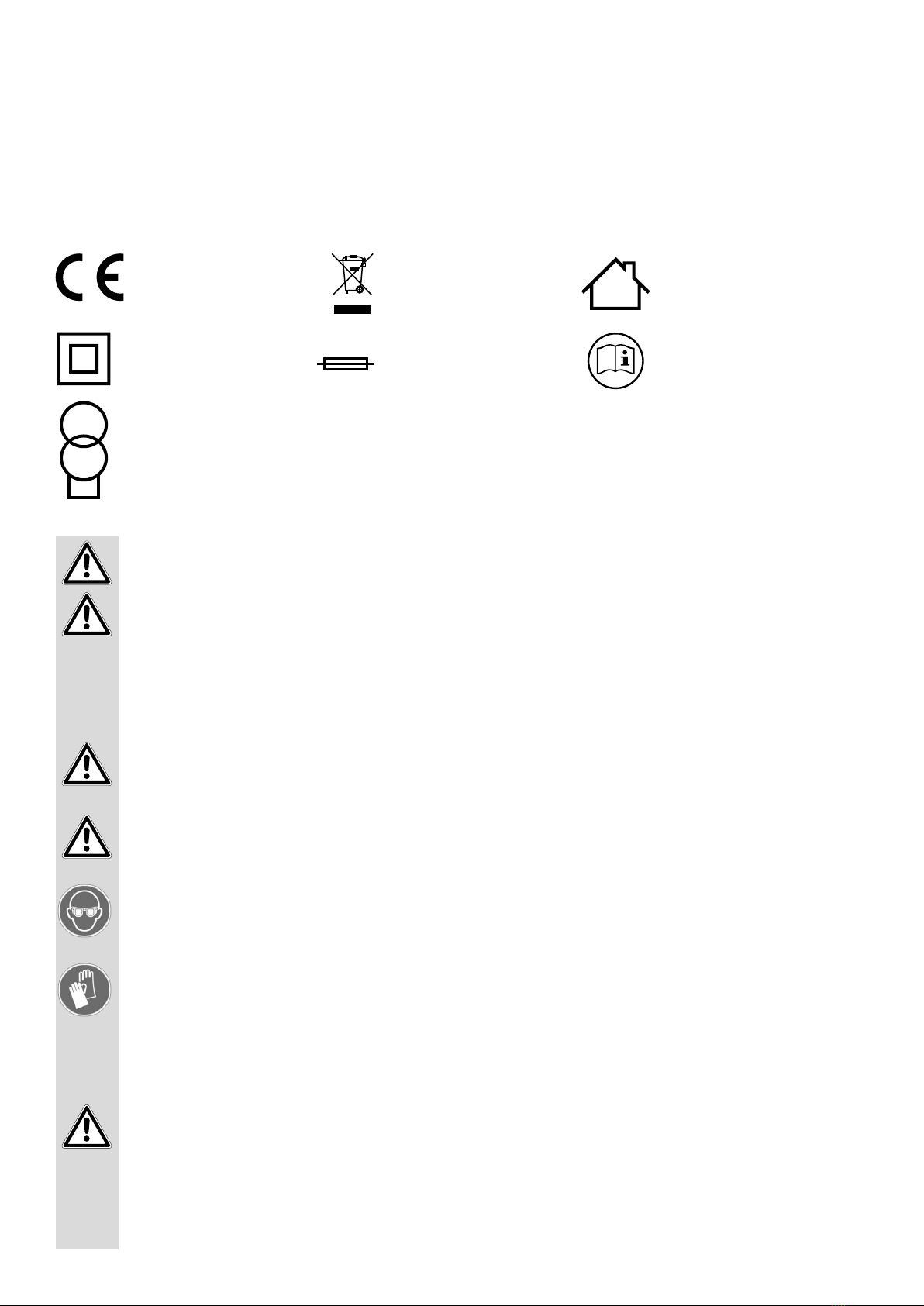
Complies with
EC directives
Fuse, here: 7.5 A
Protective insulation (sa-
fety class II) Read operating instructions
Labelled electrical products
may not be disposed of in
household garbage
Devices with this label may only
be operated inside (dry enviro-
ment)
Mains transformer - not short-circuit proof
Output voltage to max. 50Volt