BROSA Rod End Load Cell
© 0 1 BROSA AG, Tettnang, Germany English translation of the original
German document
10 / 13
...............................................................................................................................................................
................................
................................
................................
................................
...............................
............................................................................................................................................................
................................
................................
................................
................................
............................
WARNING! If due to unusual events (e.g., deformation or unusual noise),
measurement results are considered implausible or there is suspicion that the sensor is
malfunctioning for any other reason, it must not be put into operation.
3. . Additional information for operation in areas subject to explosion hazards
Only those sensors with the corresponding labels are approved for use in areas subject
to explosion hazards.
If the open cable end is connected inside an area subject to explosion hazards, the connection
must be inside a terminal box/switching cabinet certified in accordance with the ATEX-
directive. If it is connected outside an area subject to explosion hazards, it must be in line with
the general requirements for electrical equipment.
3.3 Operation and maintenance
3.3.1 Operation
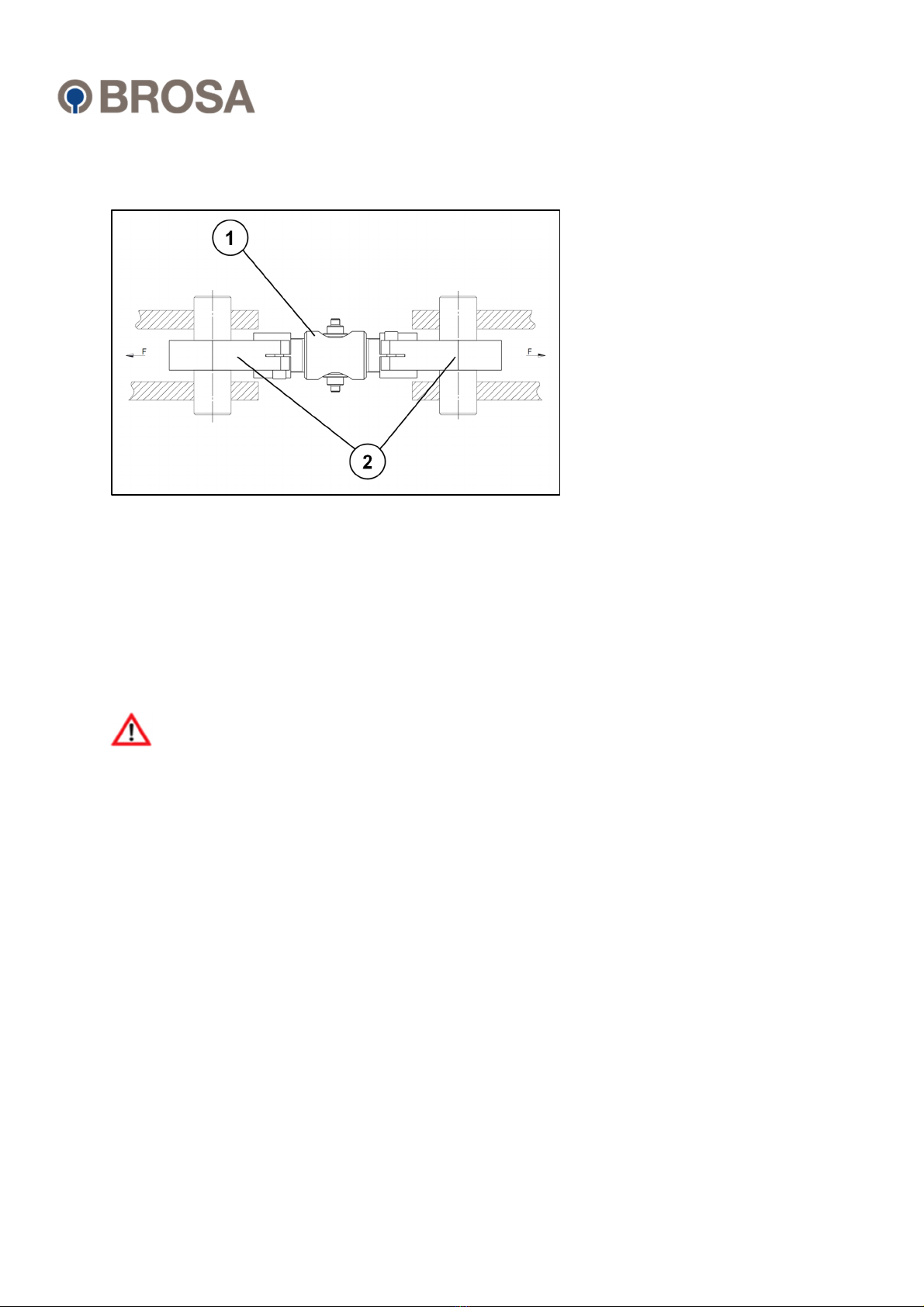
BROSA rod end load cells work independently, attaching tools is required for their operation.
Direct manual intervention by the operator is not necessary; there are therefore no
requirements for the operator to wear protective equipment during operation. However, the
requirements towards the device in which the rod end load cell is installed must be observed.
BROSA rod end load cells emit neither noise nor non-ionizing radiation.
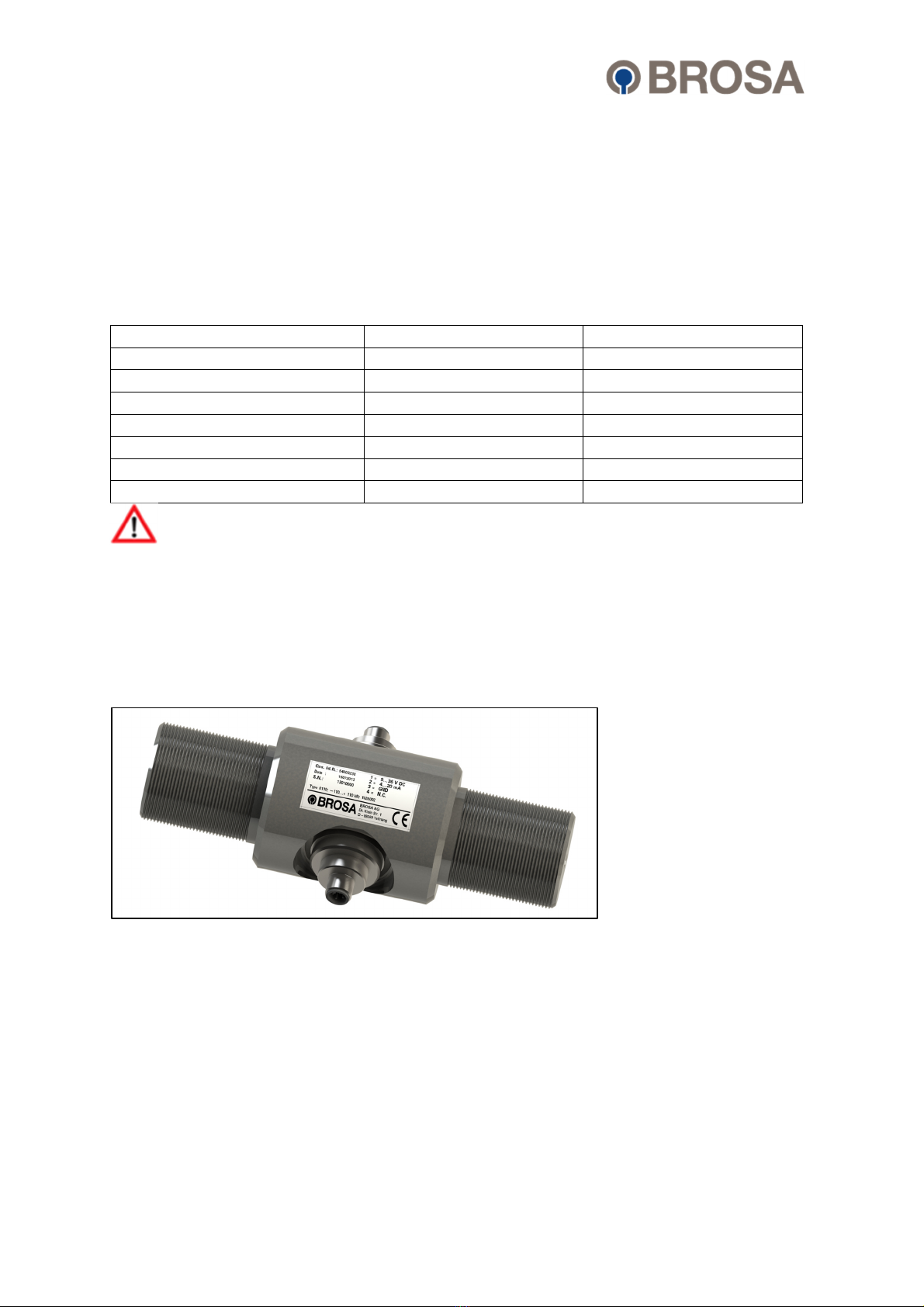
Operation of BROSA rod end load cells is permitted only within the parameters and
properties given in the technical datasheets and on the nameplate. These are, among others:
- Measuring range
- Temperature range
- Permissible supply voltage
- Electrical protection class
- Material
It must be ensured that no parasitic influences such as forces or torques transverse to the
direction of measurement are transmitted via the rod end load cells.
Inductive or capacitive coupling with the connection cable(s) of the sensor can distort the
measurement result and must be avoided. Some examples of these kinds of couplings can