5 / 11
MO 0688-1101
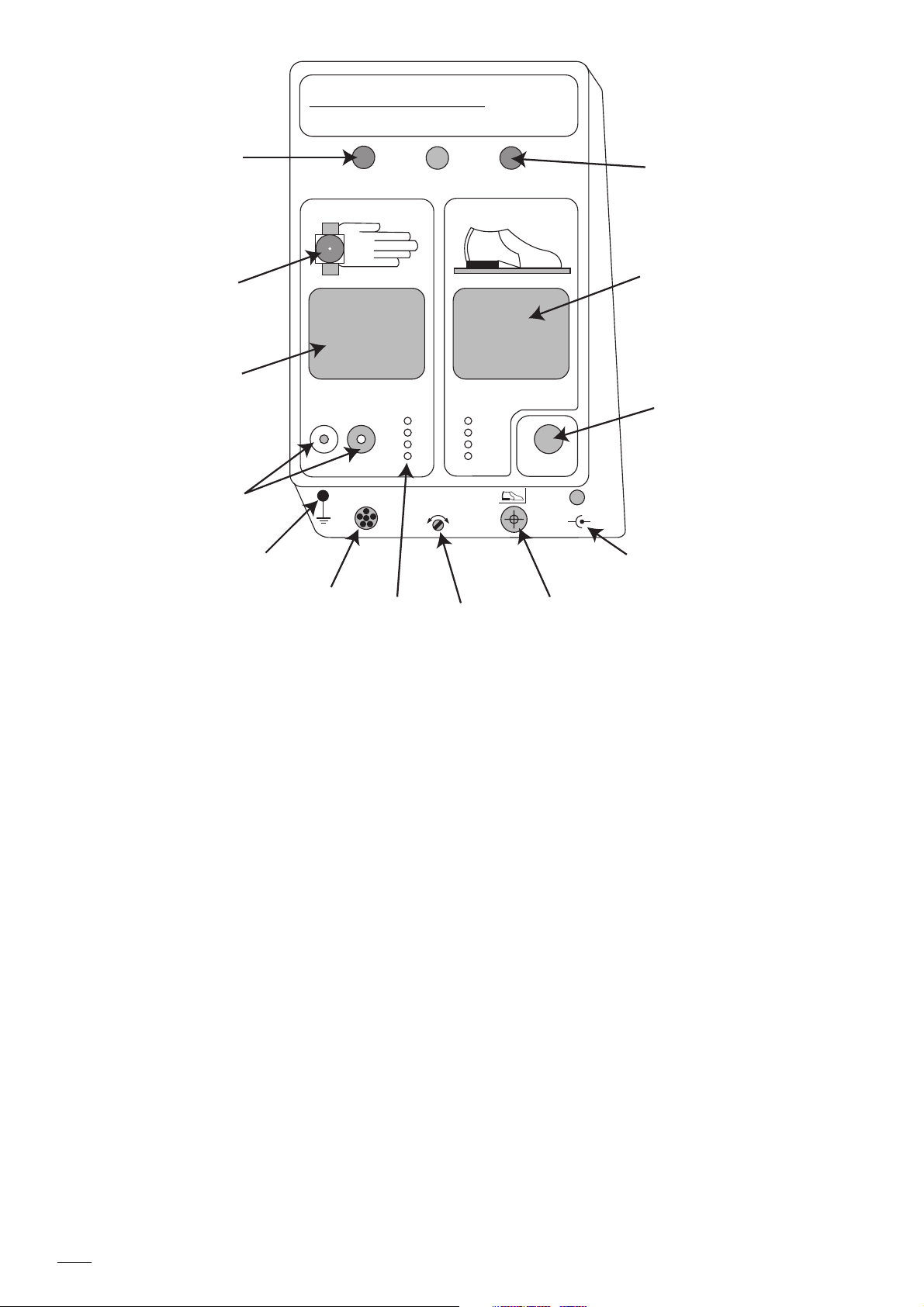
VII. Shoe test
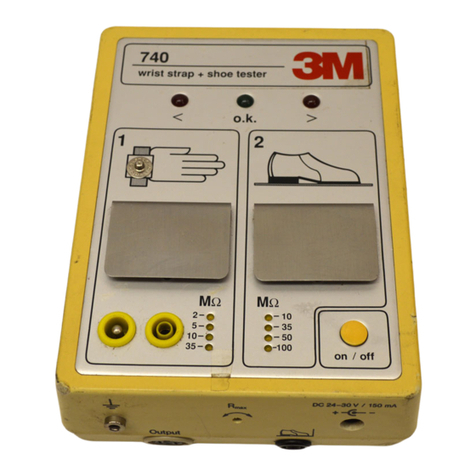
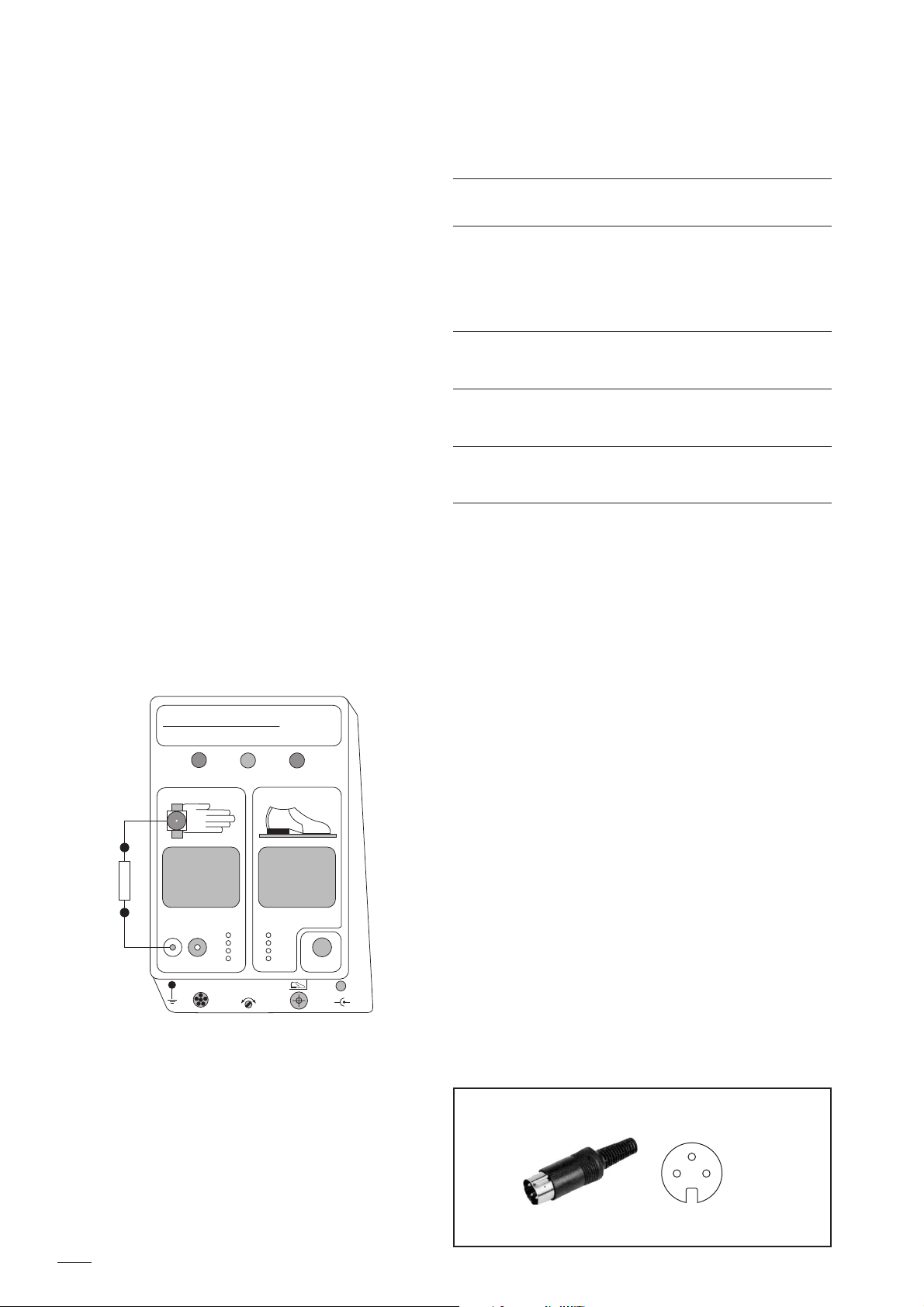
Either the 741/741D shoe electrode must be
connected to the 740 shoe jack.
a) when the 741 single shoe electrode is
used:
If the red "> "-LED is illuminated, clean the soles
of the shoes or check shoe grounding system (heel
ground or toe ground strap) and retest. If, after
cleaning, the red "> "-LED remains lit, replace it
by an appropriate device. If the red "< "-LED is
illuminated, the minimum resistance of the shoes
or shoe grounding system is under 750 kΩ.
An electrical hazard to personnel may exist at the
work place.
b) when the 741D dual shoe electrode is
used:
The dual shoe electrode allows differentiation
between the right and left shoe; giving the right
shoe a preference in indication. This means, if
both shoes or just the right one are out of range,
you will get identical indications as it would be
with the single shoe electrode. If just the left shoe
is out of range, the corresponding red LED will
flash. Consequently, in case of a steadily lit red
LED, you shall clean or remove right shoe first
and retest. If the right shoe is in the "ok"-range
then, you will obtain information about
performance of the left shoe and you can react
accordingly.
The shoe test does not influence the wrist strap
test, therefore the shoes can be tested while the
wrist strap is still connected to the 740 or the wrist
strap can be tested while the operator is standing
on the 741 shoe electrode. Both metal plates shall
not be pressed at the same time.
Switch the 740 on. Stand on the applied shoe
electrode. If you are using shoe straps with a
1MΩ- resistor on both feet to be tested with the
741 shoe electrode, you have to test the straps one
after the other, to avoid a red "too low" -
indication. Care must be taken not to put the non-
tested foot on ESD - protective flooring to avoid a
bypass to ground. Depress the metal contact plate
for shoe test until one of the indicator - LEDs
lights up. The green LED indicates that the
resistance of the person through the footwear is in
the range between 750 kΩand the desired upper
maximum level (10, 35, 50 or 100 MΩ).