manuals.online logo
Brands
  1. Home
  2. •
  3. Brands
  4. •
  5. sitrex
  6. •
  7. Farm Equipment
  8. •
  9. sitrex MKE/14-16 User manual

sitrex MKE/14-16 User manual

This manual suits for next models

2

Other sitrex Farm Equipment manuals

sitrex 250.799 User manual

sitrex

sitrex 250.799 User manual

sitrex TR/6-S Quick setup guide

sitrex

sitrex TR/6-S Quick setup guide

sitrex DM/6 Guide

sitrex

sitrex DM/6 Guide

sitrex MX 12 Quick setup guide

sitrex

sitrex MX 12 Quick setup guide

sitrex SR 320/8 H Guide

sitrex

sitrex SR 320/8 H Guide

sitrex M 60 MINI/S User manual

sitrex

sitrex M 60 MINI/S User manual

sitrex SM/230 Assembly instructions

sitrex

sitrex SM/230 Assembly instructions

sitrex TR/11 Quick setup guide

sitrex

sitrex TR/11 Quick setup guide

sitrex GS 160 User guide

sitrex

sitrex GS 160 User guide

sitrex RT/5200 Quick setup guide

sitrex

sitrex RT/5200 Quick setup guide

sitrex SB150 Quick setup guide

sitrex

sitrex SB150 Quick setup guide

sitrex SR 320/8 User guide

sitrex

sitrex SR 320/8 User guide

sitrex Action 120 User manual

sitrex

sitrex Action 120 User manual

sitrex DM/4 Guide

sitrex

sitrex DM/4 Guide

sitrex MX 8 Quick setup guide

sitrex

sitrex MX 8 Quick setup guide

sitrex MKE/18-20 User manual

sitrex

sitrex MKE/18-20 User manual

sitrex MK14 MY15 User manual

sitrex

sitrex MK14 MY15 User manual

sitrex QRX 12 Quick setup guide

sitrex

sitrex QRX 12 Quick setup guide

sitrex SR 420/11 H Guide

sitrex

sitrex SR 420/11 H Guide

sitrex BR 2030/6 User manual

sitrex

sitrex BR 2030/6 User manual

sitrex RT/5800-H Quick setup guide

sitrex

sitrex RT/5800-H Quick setup guide

sitrex BR 2030/6 User manual

sitrex

sitrex BR 2030/6 User manual

sitrex RP/4 Guide

sitrex

sitrex RP/4 Guide

sitrex SM 3600 Quick setup guide

sitrex

sitrex SM 3600 Quick setup guide

Popular Farm Equipment manuals by other brands

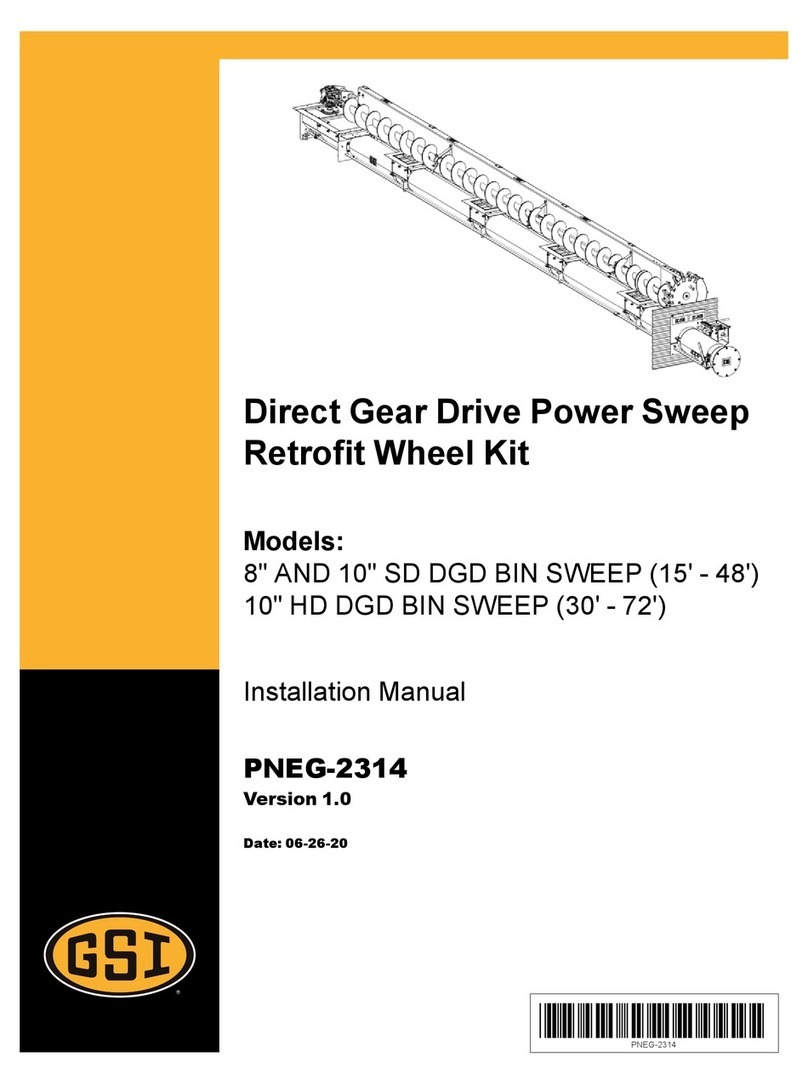
GSi PNEG-2314 installation manual

GSi

GSi PNEG-2314 installation manual

Checchi & Magli TEXDRIVE owner's manual

Checchi & Magli

Checchi & Magli TEXDRIVE owner's manual

Amazone Cenius 4003-2TX operating manual

Amazone

Amazone Cenius 4003-2TX operating manual

MASSEY FERGUSON MF 9313S Operator's manual

MASSEY FERGUSON

MASSEY FERGUSON MF 9313S Operator's manual

Cima BLITZ Maintenance Instruction

Cima

Cima BLITZ Maintenance Instruction

Amazone CombiDisc 3000 Original operating manual

Amazone

Amazone CombiDisc 3000 Original operating manual

HE-VA Disc-Roller XL Contour Operating instructions/spare parts list

HE-VA

HE-VA Disc-Roller XL Contour Operating instructions/spare parts list

AGT AGT-SSFM product manual

AGT

AGT AGT-SSFM product manual

Milestone 72-84 manual

Milestone

Milestone 72-84 manual

KUHN Hector 3000 Complementary instructions

KUHN

KUHN Hector 3000 Complementary instructions

Krone X-Disc 6200 operating instructions

Krone

Krone X-Disc 6200 operating instructions

Eliet DZC450 manual

Eliet

Eliet DZC450 manual

Taarup BIO+ B4000 Operator's manual

Taarup

Taarup BIO+ B4000 Operator's manual

Garland SHAKER 310 DPG instruction manual

Garland

Garland SHAKER 310 DPG instruction manual

stable comfort StableWall System installation guide

stable comfort

stable comfort StableWall System installation guide

Raven AccuBoom installation manual

Raven

Raven AccuBoom installation manual

International 710 Operator's manual

International

International 710 Operator's manual

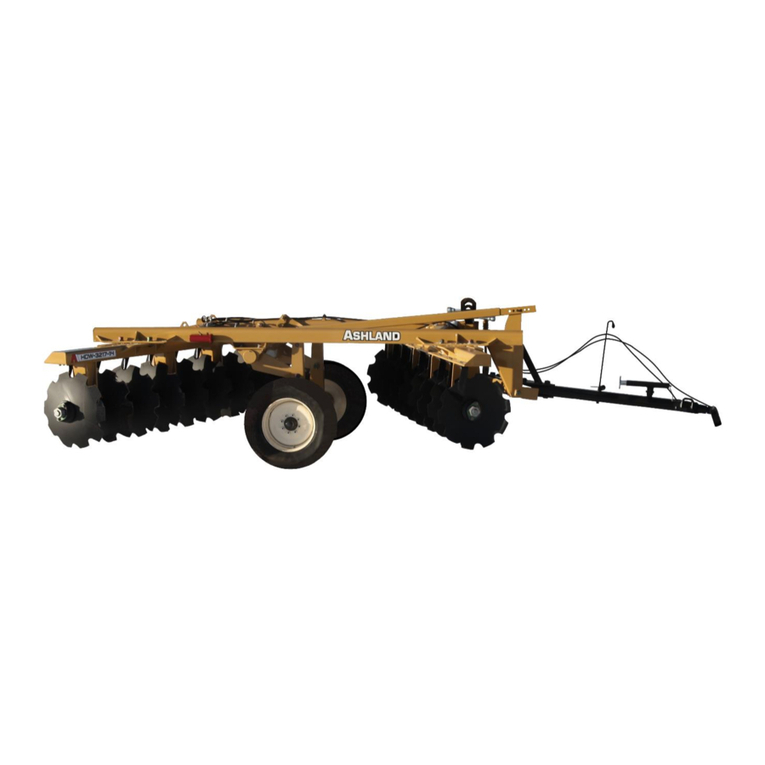
Ashland HDW-3217-14 parts manual

Ashland

Ashland HDW-3217-14 parts manual

manuals.online logo
manuals.online logoBrands
  • About & Mission
  • Contact us
  • Privacy Policy
  • Terms and Conditions

Copyright 2025 Manuals.Online. All Rights Reserved.

ASSEMBLY
MKE/14-16
12-2014
2
Assembly Instructions
Examples of general measurements for identifying assembly accessories according to
type.
To make it easier to identify the assembly accessories (nuts, bolts, washers, pins, etc.)
on the basis of the general dimensions and the type, we provide a diagram that shows
you the accessory parts to which the measurements refer as given in the various steps
of assembly.
The drawings are schematic and do not always faithfully reproduce the accessories,
but they will be of help in identifying them correctly.
Note: the accurate measurements are those given in mm; those given in inches are
rounded off, and for threads the size in inches is given only as an aid, as it does not
accurately describe the thread.
You can see the following examples:
Box “A”: shows springs that are will be identified by the wire diameter, the outside
diameter and the length, thus in this case ø3-ø18x110 (ø0.12”-ø0.71”x4.33”)
Box “B”: shows handles, spring pins, split pins, etc. that will be identified by the
diameter of the shank and the length, thus in this case ø8 x 50 (ø0.12” x 1.97”)
Box “C”: shows shims, bushings, spacers and washers in general that will be
identified by the inside diameter, the outside diameter and the length and/or the
thickness (for washers), thus in this case ø18-ø35 x 30 (ø0.71”-ø1.38” x 1.18”) or for
washers ø18-ø35 x 3 (ø0.71”-ø1.38” x 0.12”).
Box “D”: shows retaining rings for internal housings/bores that will be identified by
the diameter of the bore preceded by an I, thus in this case I35-1.38”, and for external
shafts that will be identified by the diameter of the pin preceded by an E, thus in this
case E35-1.38”.
Box “E”: shows pins, bolts, etc. that will be identified by the outside diameter (thread
diameter for bolts) and the length, thus in this case ø20 x 70 (ø0.78” x 2.76”) or for
bolts M20 x 70 (0.78” x 2.76”).
Box “F”: shows nuts and grease nipples that will be identified by the thread diameter,
thus in this case M10 (0.39”).
Box “G”: shows R-clips that will be identified by the diameter of the shank, thus in
this case ø3 (ø0.12”).
3
Assembly Instructions
Examples of general measurements for identifying accessories for
assembly according to type.
For tightening torques, see the table below (the class of the material is normally
stamped on the head of the bolts).
4
General assembly instructions for all models in the MK series.
As regards the indicating of
right/left, they are understood to be
attributed observing the machine
from point A (behind the machine)
looking forward.
The machine must be assembled in a suitable area, done by qualified personnel
equipped with the proper clothing, protective equipment and tools necessary for the
job. Only authorized persons should be in the assembly area.
Assembly is correct when the various RH sections A, C, E, etc. and the various LH
sections B, D, F, etc. are aligned and parallel to each other and when the coupling
flanges G between one section and another are flush. NOTE: since these are sections
to be joined by means of welded flanges, there will not be perfect linearity between
RH sections A, C, E, etc. and LH sections B, D, F, thus a certain margin of error
must be tolerated. To reduce this error to a minimum, a few small techniques must
be used. For example, tighten the flange coupling bolts, one outside 1 and one inside
2, if the RH sections A, C, E, etc. and LH sections B, D, F, etc. are linear; or tighten
first the outside bolts 3-4 if the sections tend to curve toward the inside of the
machine, and vice versa tighten first the inside bolts 5-6 if the sections tend to curve
toward the outside.
The alignment of the sections is important, as it also affects the assembly of the rake
wheel lifting pipes and how they slide along supports H during use. Bearing in mind
this advice, you can proceed with the assembly following the steps illustrated in
following. Unless otherwise specified, the assembly is shown for just one side of the
machine, but as it is symmetrical, simply repeat the same steps on the other side as
well. The quantities of the materials to be used for the various assembly steps refer
to both sides of the machine. The weights given near the major components may
vary by +/- 5%.
NOTE: What we are about to describe is an approximate assembly procedure. Each
person, based on their experience and on the tools they have to work with, may vary
the assembly steps to suit their needs. Always use great caution because the
assembly steps are dangerous.

5
6
1) DANGER
Insert bushings 4 in the openings in
supports 2-3 (RH/LH - 40kg/88lbs).
Lift unit 1 (weight 110kg/245lbs) with
asuitable forklift W. Connect the
vertical supports 2-3 to the crosspiece
assembly 1 using pin 5, washers 6-7
and bolt 8.
Insert the grease nipples 9 into the
openings in supports 2-3 and in the
crosspiece assembly 1.
In this step, you will use:
Item 4: 4 bushings ø50-60x50 (ø1.97”-
2.36”x1.97”)
Item 5: 2 pins ø50x190 (ø1.97”x7.5”)
Item 6: 2 spacers ø23-75x12 (ø0.91”-
2.95”x0.47”)
Item 7: 2 split washers ø23-35x4
(ø0.91”-1.38”x0.16”)
Item 8: 2 bolts M22x50 (0.87”x1.97”)
Item 9: 4 grease nipples M8 (0.32”)
2) DANGER
Work very carefully because the unit
assembled so far is very unstable. To
make sure that the supports 2-3 have
been attached correctly to unit 1,
check that the dimensions are those
given in the drawing at the side.
Note: The central holes A in the
lower flanges of supports 2-3 must
be on the inside.
7
3) DANGER
The tie rod 4 is preassembled to the right size for it to be attached to seat A on the
crosspiece assembly 1 and to seats C on the vertical supports 2-3. Part B of tie rod 4
goes to seat A on the crosspiece assembly 1 and part D goes to seat C on the vertical
supports 2-3. If a small adjustment must be made to adjust the length, loosen nut E,
rotate the head D until it reaches the right length, then lock in place with nut E. Connect
fork B on tie rod 4 to seat A on the crosspiece assembly 1 and part D of tie rod 4 to part
C of supports 2-3 using the pins 5, washers 6 and nuts 7.
In this step, you will use:
Item 5: 4 pins ø25x58 (ø1”x2.28”)
Item 6: 4 washers ø12-36x4 (ø0.47”- 1-42” x 0.16”)
Item 7: 4 nuts M12 (0.47”)
8
4) DANGER
Attach the wheel hubs 1 to vertical
supports 2-3 using bolts 4 and nuts
5. Attach the wheels 6 to the hubs 1
and fasten with the special nuts 7.
Note: the rounded part A of the
special nut 7 should be applied
facing the wheel 6.
In this step, you will use:
Item 4: 6 bolts M16x50
(0.63”x1.97”)
Item 5: 6 nuts M16 (0.63”)
Item 7: 10 special nuts M16x1.5
(0.63”)
5) DANGER
To continue with the assembly, unit
1must be stabilized. This can be
done either with a support K or
with a forklift W. Chocks H must
also be applied to the wheels.

Proceed with caution in the next
assembly steps, even with the unit
stabilized.

9
6) DANGER
Check that manufacturer
has assembled on the
vertical supports 1-2
(RH-LH) the pins 5,
spacers 6, washers 7 and
nuts 8 that you will use
for assembly in the
order in which you find
them assembled.
Check that manufacturer
has assembled the
bushings B to their seats
on sections 3-4 (RH-
LH).
Now attach sections 3-4
(RH-LH) to the seats on
the vertical supports 1-2
(RH-LH) using the pin
5, spacer 6, washers 7
and nuts 8.
Once sections 3-4 are
attached, set them on a
support A. Now apply
the grease nipples 9 to
the openings in sections
3-4.
6) DANGER
In this step, you will use:
Item 5: 2 pins ø35x450 (ø1.38”x17.72”)
Item 6: 2 spacers ø35-52x1.5 (ø1.38”-2.05”x 0.06”)
Item 7: 2 washers ø23-50x4 (ø0.91”-1.97”x 0.16”)
Item 8: 2 nuts M22 (0.87”)
Item 9: 2 grease nipples M8 (0.32”)
10
7) DANGER
Check that pipe B protrudes about 288mm-11.34” from section 1-2. Note: this
measurement is with the cylinder to which it is attached completely closed, and the total
pipe length must be 1670 mm – 65.75”.
Now attach sections 3-4 (RH-LH – 65kg/143lbs) to sections 1-2 (RH-LH) using bolts 5
and nuts 6.
Note: Once sections 3-4 are attached, move support A forward or use and additional
support.
In this step, you will use:
Item 5: 20 bolts M16x45 (0.63”x1.77”)
Item 6: 20 nuts M16 (0.63”)